By Gabor
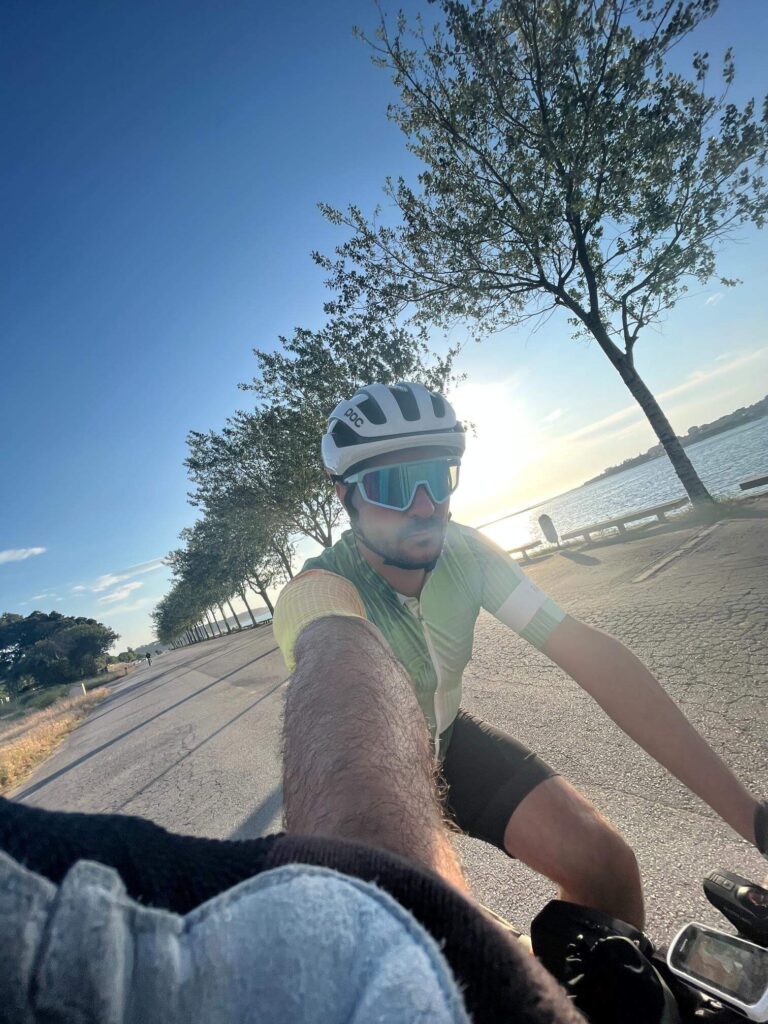
 The plan was simple enough: pedal 540 kilometres before the 26th of May and arrive in Pontevedra, Galicia. Simple on paper, anyway.
I started where every bikepacking trip through Portugal should start — under the Ponte 25 de Abril, the bridge that towers over the Tagus with the kind of scale that makes you feel very small on a loaded bike. From there, north.
Day 1 — Lisbon to Lagoa de Óbidos (113 km, 1,644 m elevation)
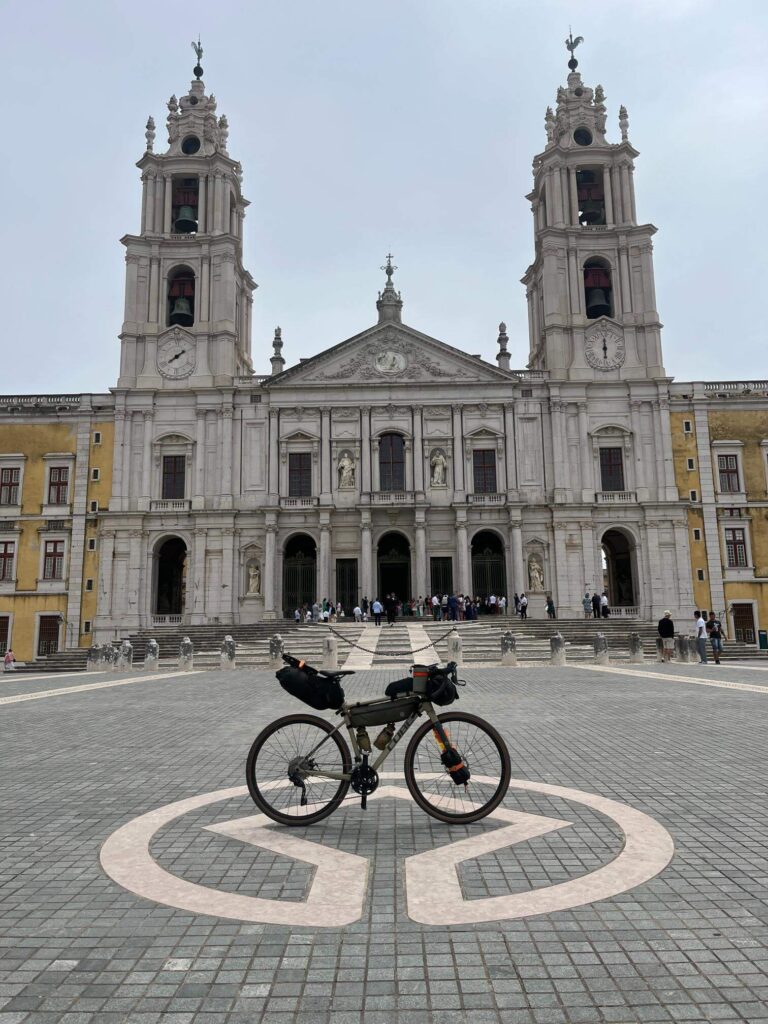
First stop was Mafra, one of the most impressive palaces in Portugal. I rolled into the square, refuelled, took a moment to appreciate how absurd it looked to have a bikepacking rig parked in front of a baroque monastery, then kept moving.
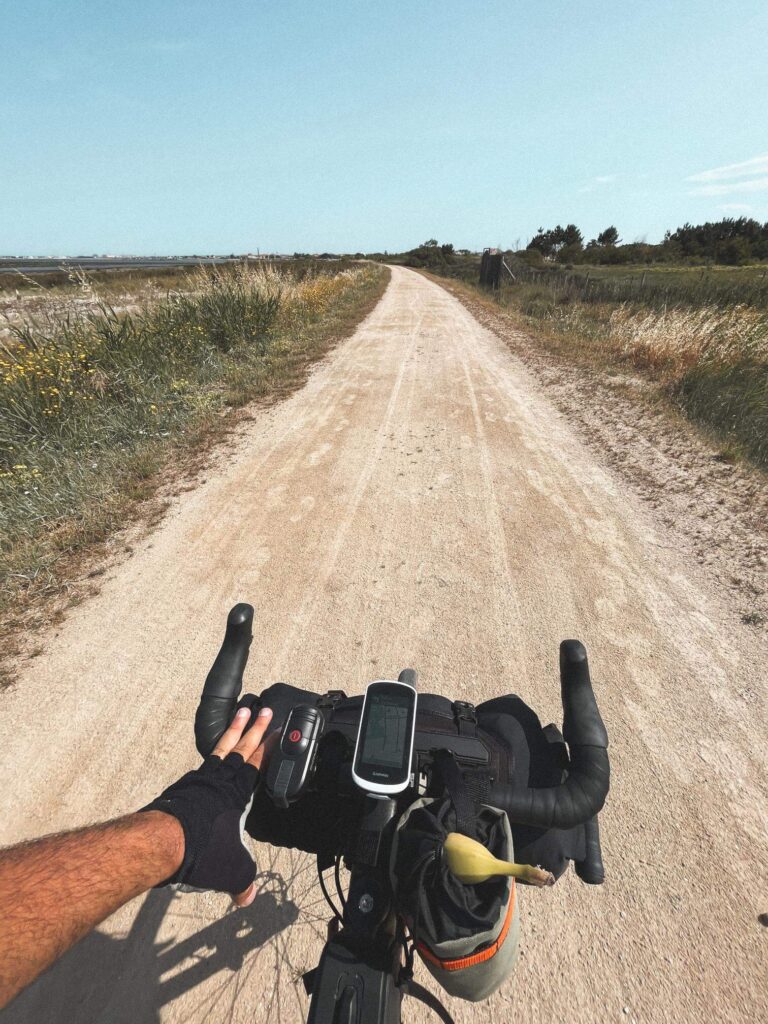
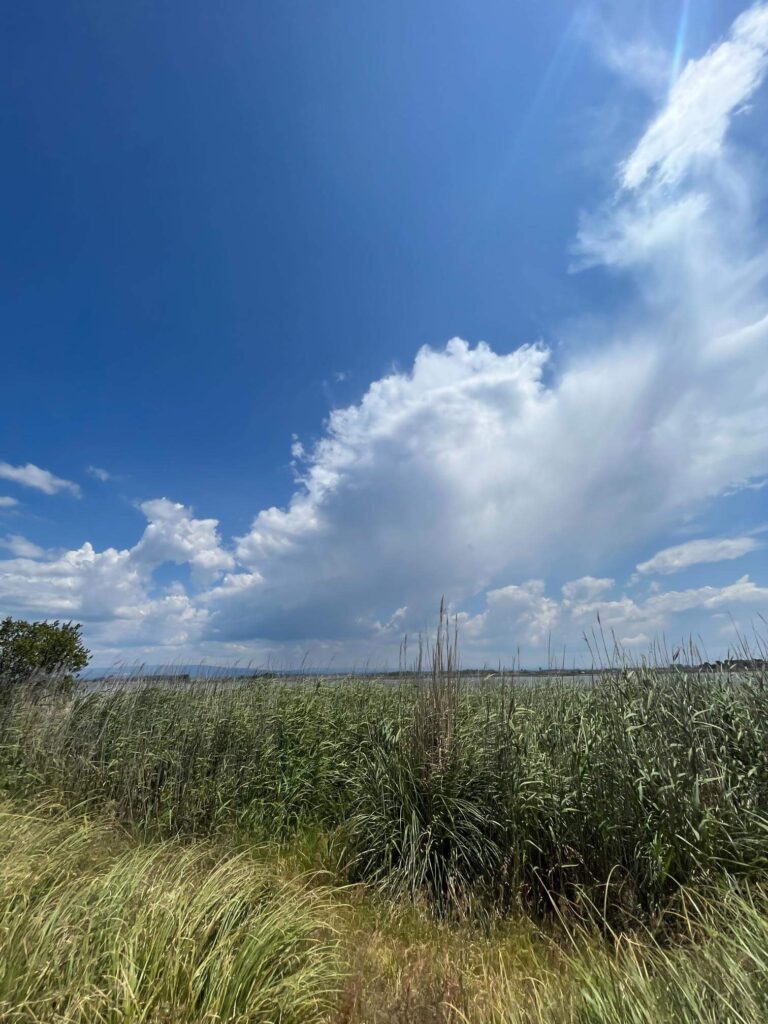
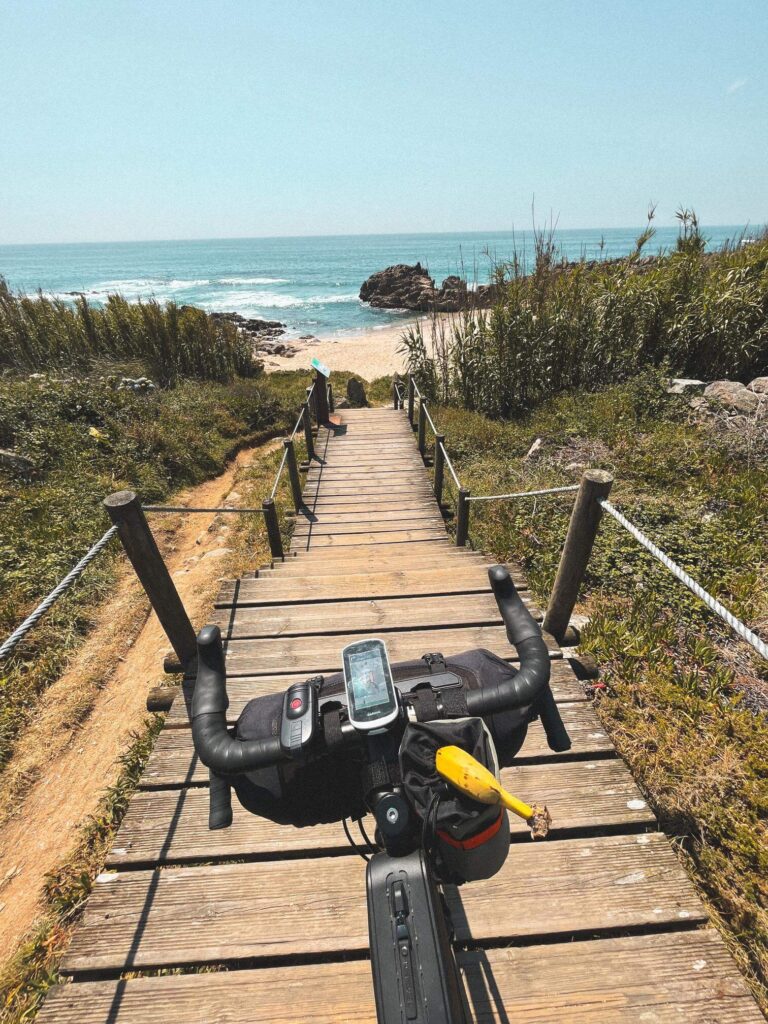
The highlight of the day — maybe the whole trip — came near the coast. I’ve never seen a cycling path literally running along the beach before. The boardwalk crossing out toward the ocean was something I had to stop and photograph. Then came the Lagoa de Óbidos, which from a distance looks like a vast inland lake but where it meets the sea it opens up into a kitesurfer’s paradise. The gravel road running alongside it was the most scenic I’ve ridden while bikepacking in Portugal. That’s not something I say lightly.
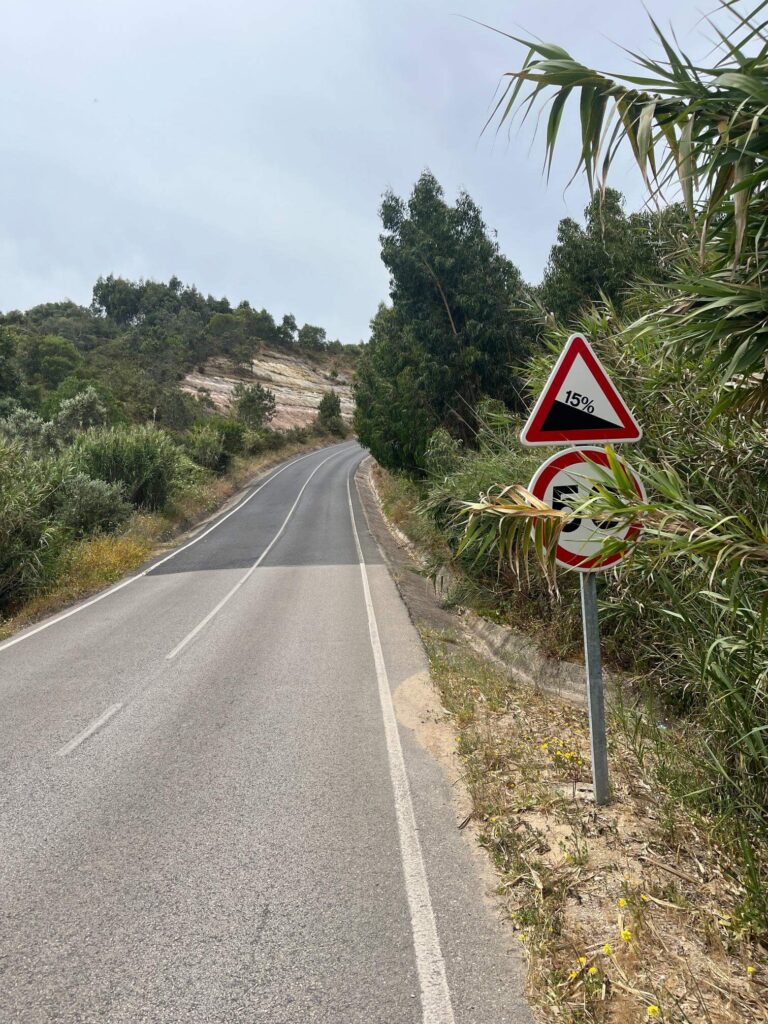
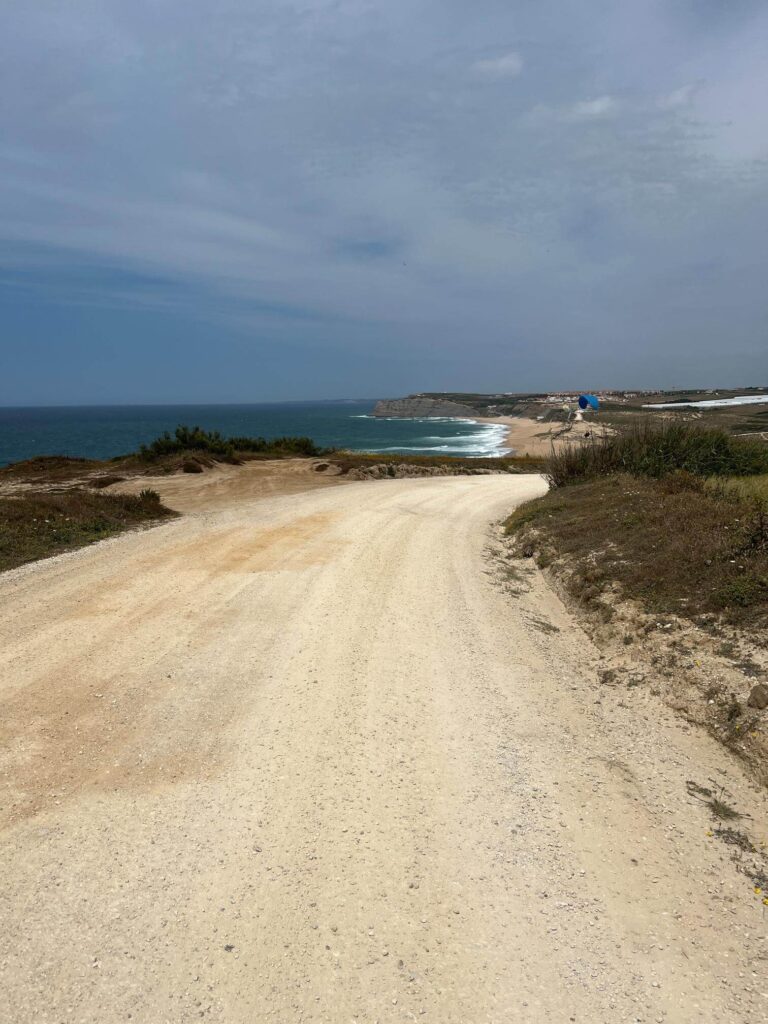
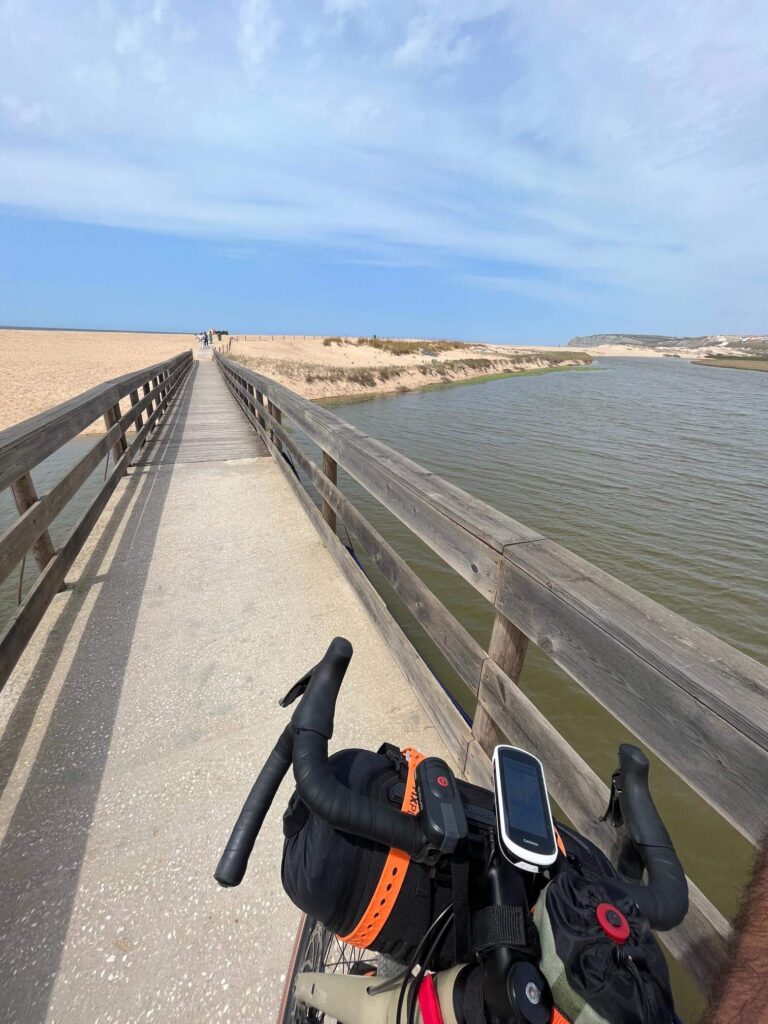
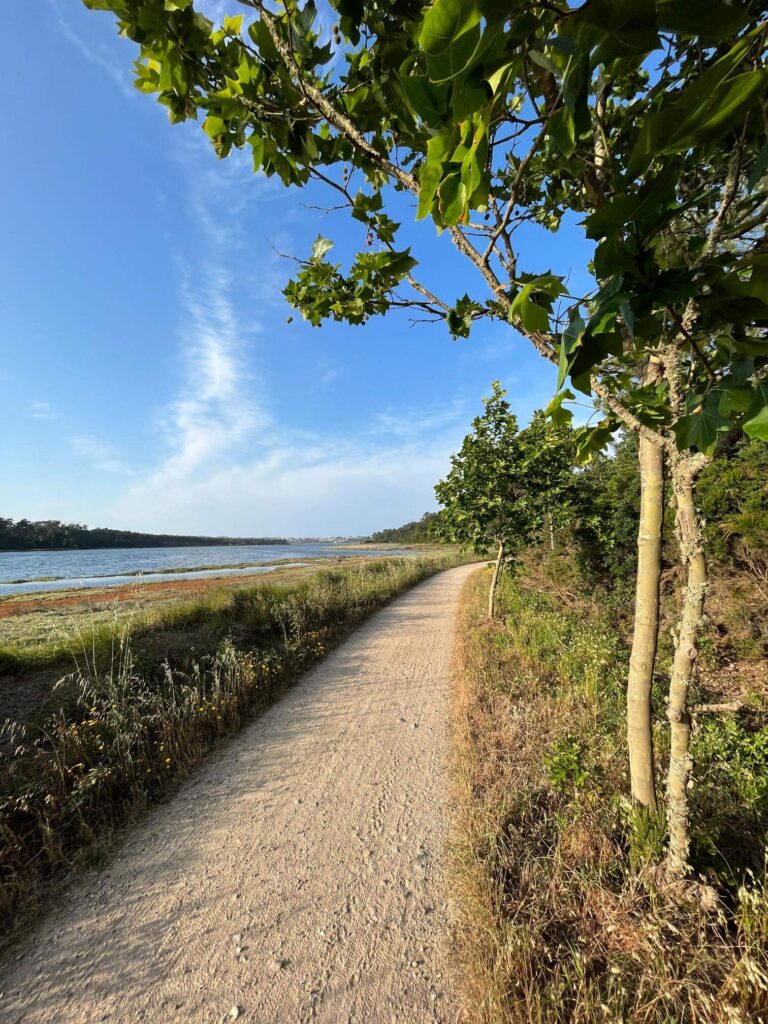
By the end of day one: 113 km done, 1,644 m of climbing, 7 hours and 11 minutes of moving time, and 4,162 calories burned. Portugal had made a good first impression.
Day 2 — Nazaré and northward (21 May)
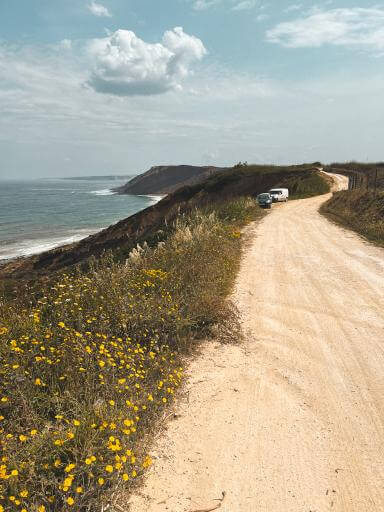
The road to Nazaré delivered. Clifftop gravel, no wind at all, wildflowers dropping down toward the Atlantic. One of those days that reminds you why bikepacking Portugal’s west coast is worth every hour of planning.
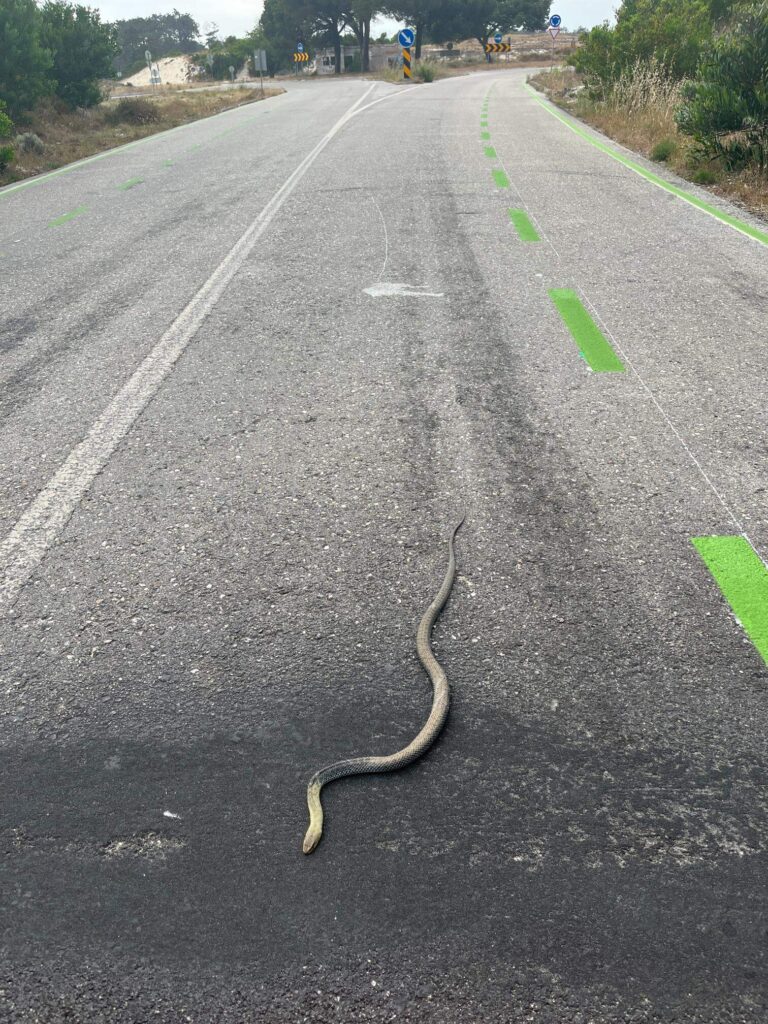
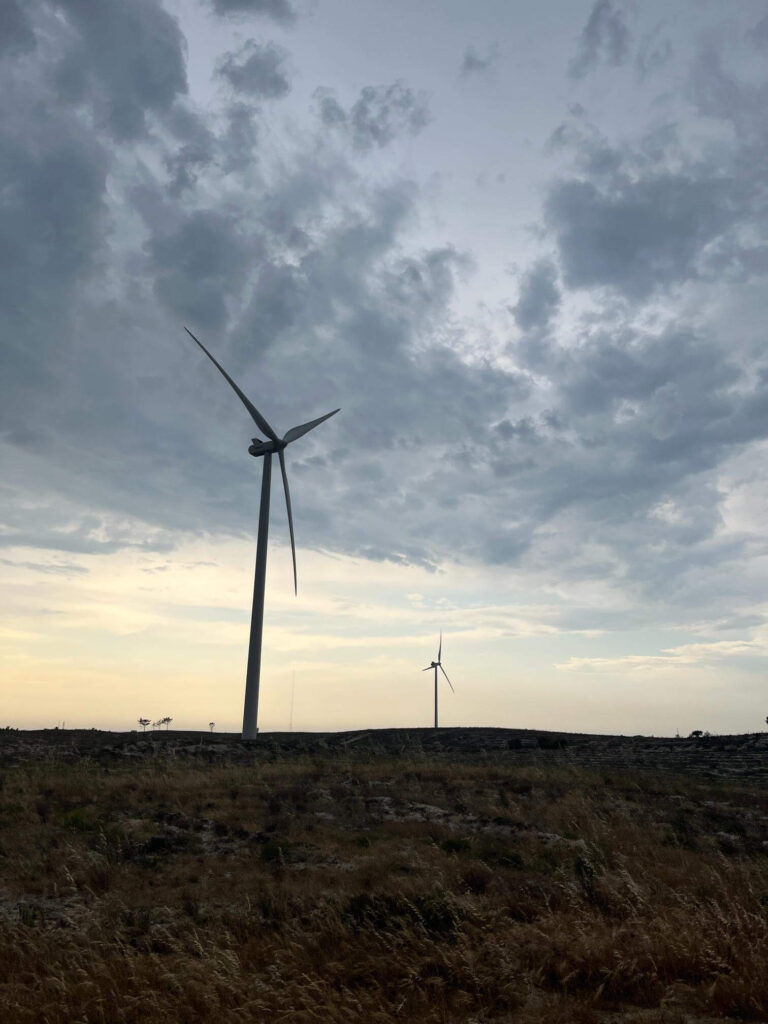
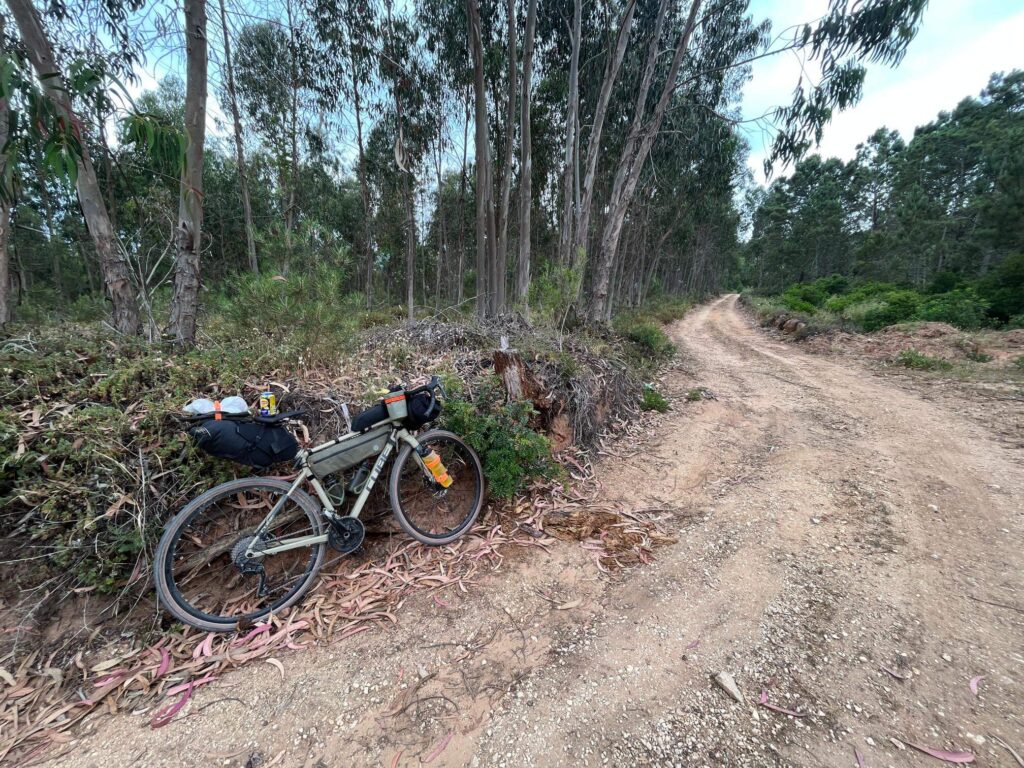
The landscape kept shifting — one hour I was in sand dunes with a sky so strange it felt like a scene from Interstellar, the next I was riding through dense green forest where the ferns were waist-high and the light came through the pines in shafts.
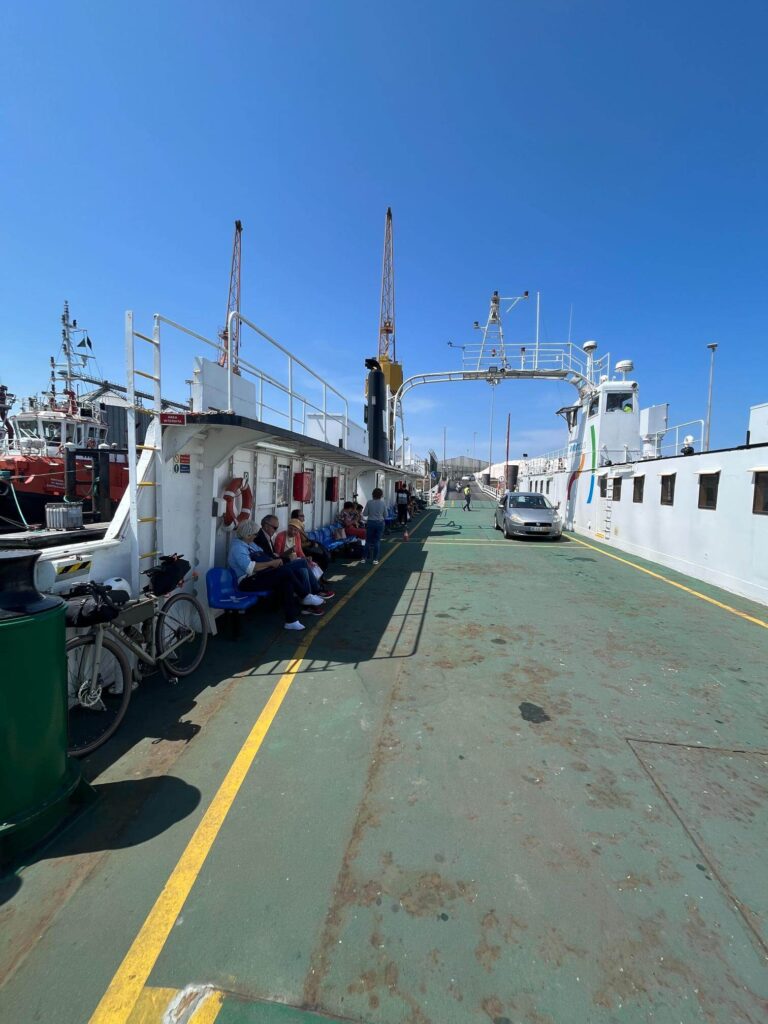
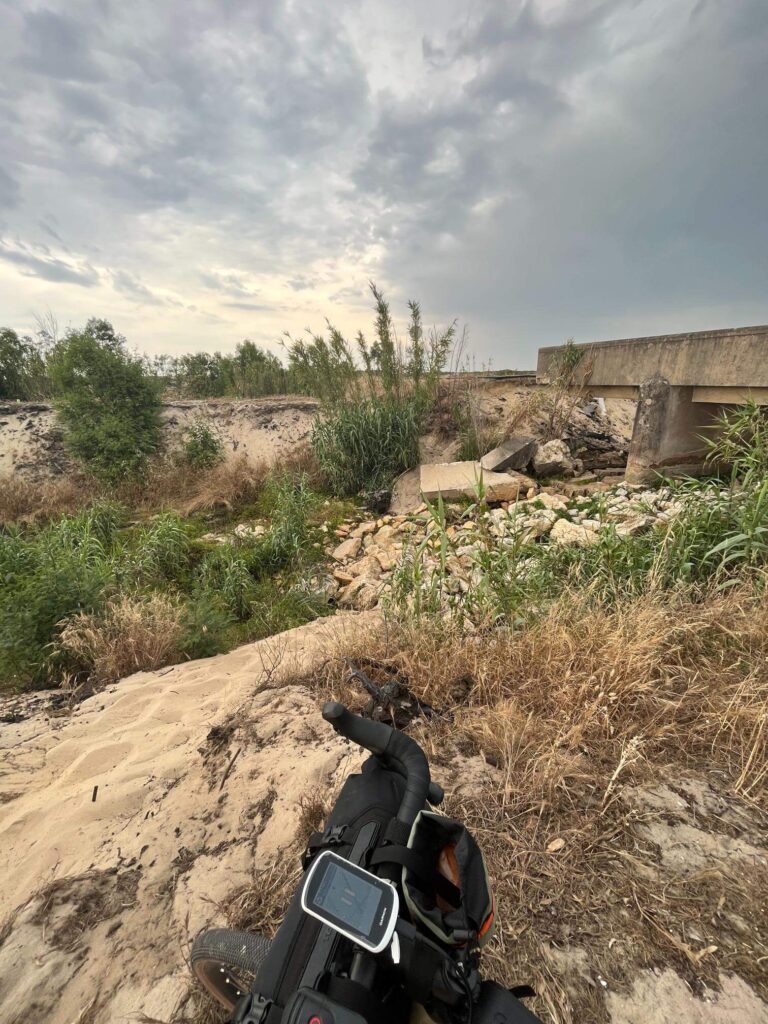
Then came a problem. I’d planned to cross a major bridge but the pedestrian walkway was closed, and trucks were going over at 120 km/h — not a situation I was willing to ride into. An hour of replanning later, I found a hidden free ferry that crossed me to the other side. One of those moments where the detour turns out to be the better story.
The day ended camping, with a tent that needed a wood stick instead of its carbon pole — I’d lost the original one earlier. A friend had made that pole for me. Sorry, Gabor.
Day 3 — Forests, bridges, and a rainy campsite (22 May)
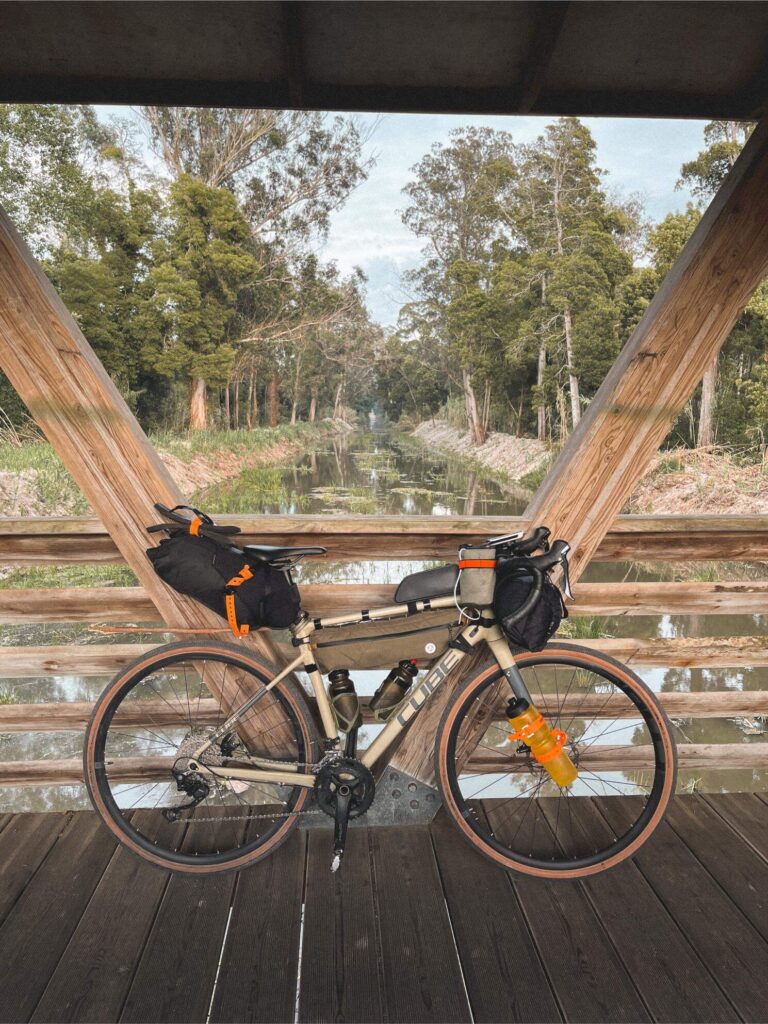
Morning: bike maintenance before anything else. Beyond the repairs, the day produced one of the more unexpected sights of the whole bikepacking route through Portugal — a beautiful covered wooden bridge, the kind you’d expect to find in a fairy tale, cutting through dense riverside vegetation.
Since leaving Lisbon I’d been staying exclusively at Orbitur campsites — no reservations, just show up and they’d point me to a spot. It was raining when I arrived that evening. Fun.
Day 4 — Into Porto (23–24 May)
Clear skies, more gravel, the sea always somewhere to my left. I was tracking north along the coast, passing through Aveiro on a route that’s one of the better-kept secrets of bikepacking Portugal’s Atlantic corridor.
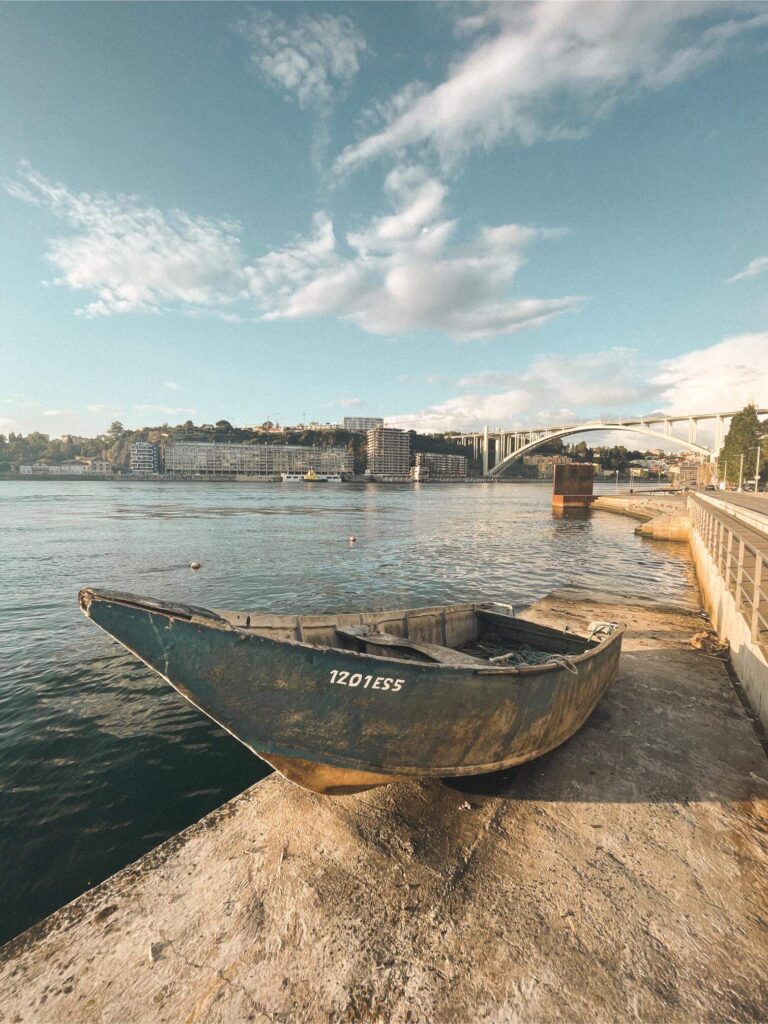
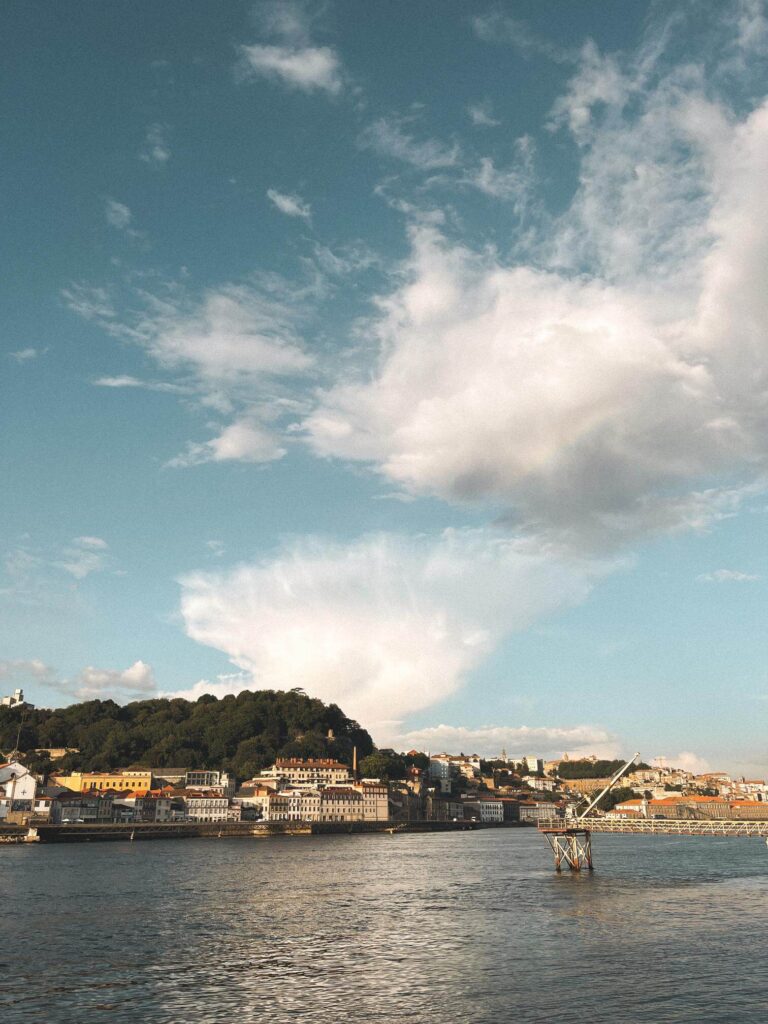
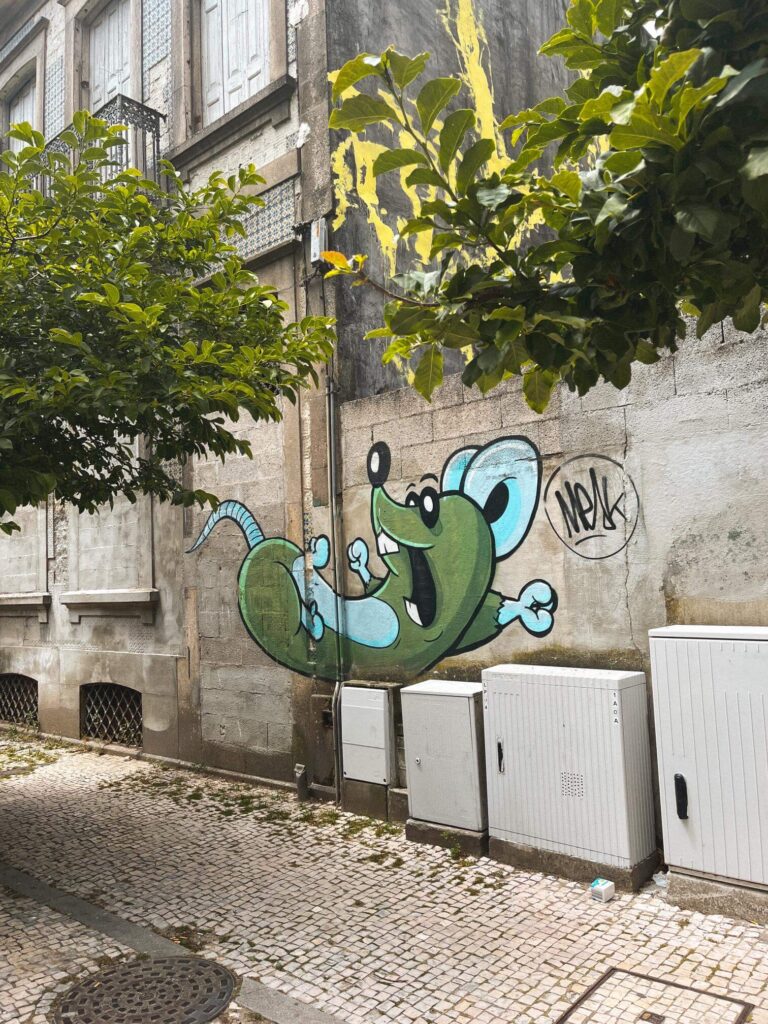
Porto was the big milestone. I arrived safe, had cold beers with good company, slept in a real bed — thanks to Babi for hosting. The next morning, knee pain made the decision for me: one rest day before the final push. I used the time to walk the city, found a mural by street artist @MESK85 that immediately became a favourite, and tried not to think too much about the cobblestones I’d be navigating out of the city the next day.

Day 5 — Porto to Viana do Castelo (25 May)
I was annoyed at this section of the route almost from the start. 40 kilometres of cobblestones out of Porto — real, bone-rattling, progress-destroying cobblestones. Anyone bikepacking Portugal northward from Porto should know about this and plan accordingly.
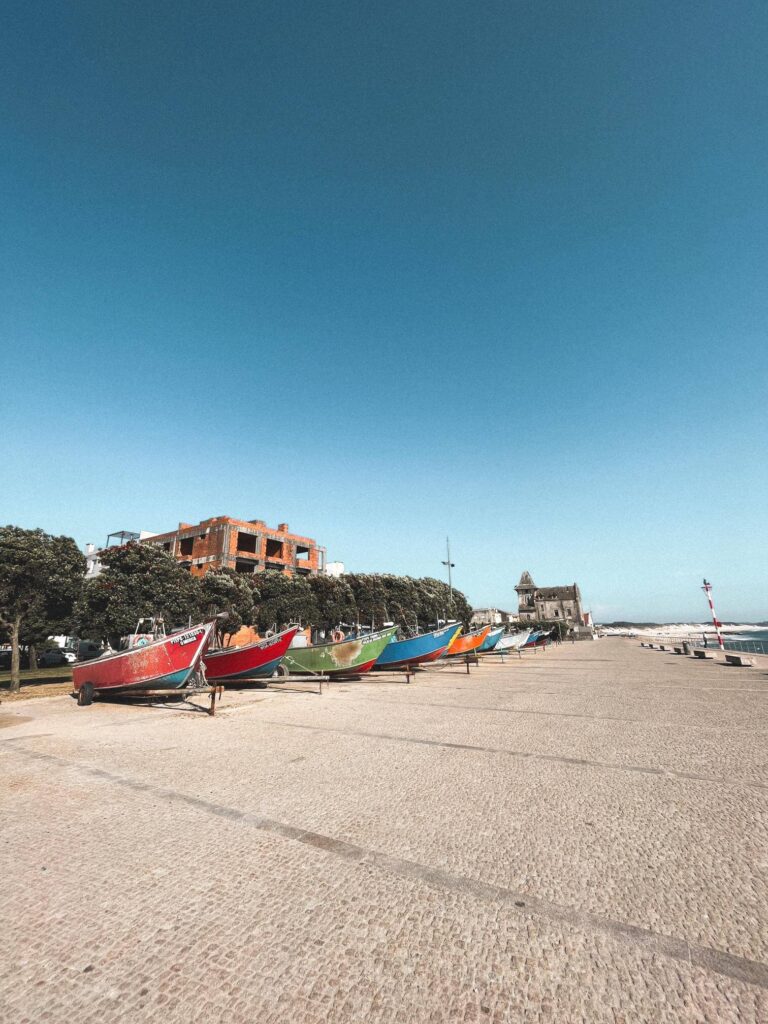
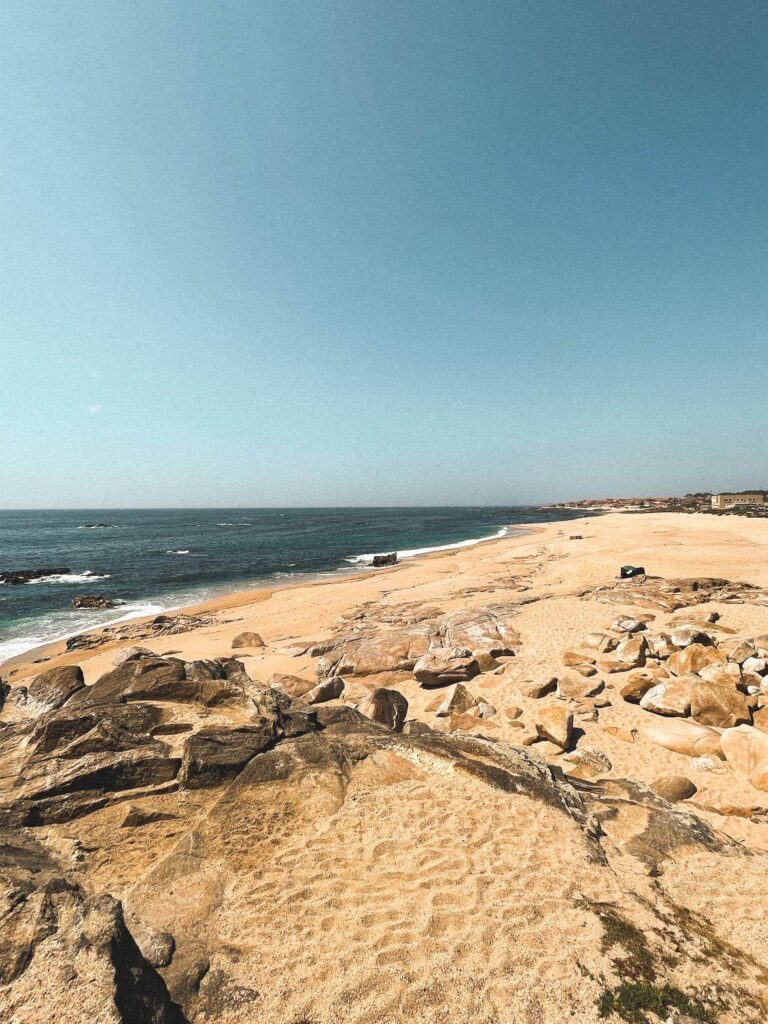
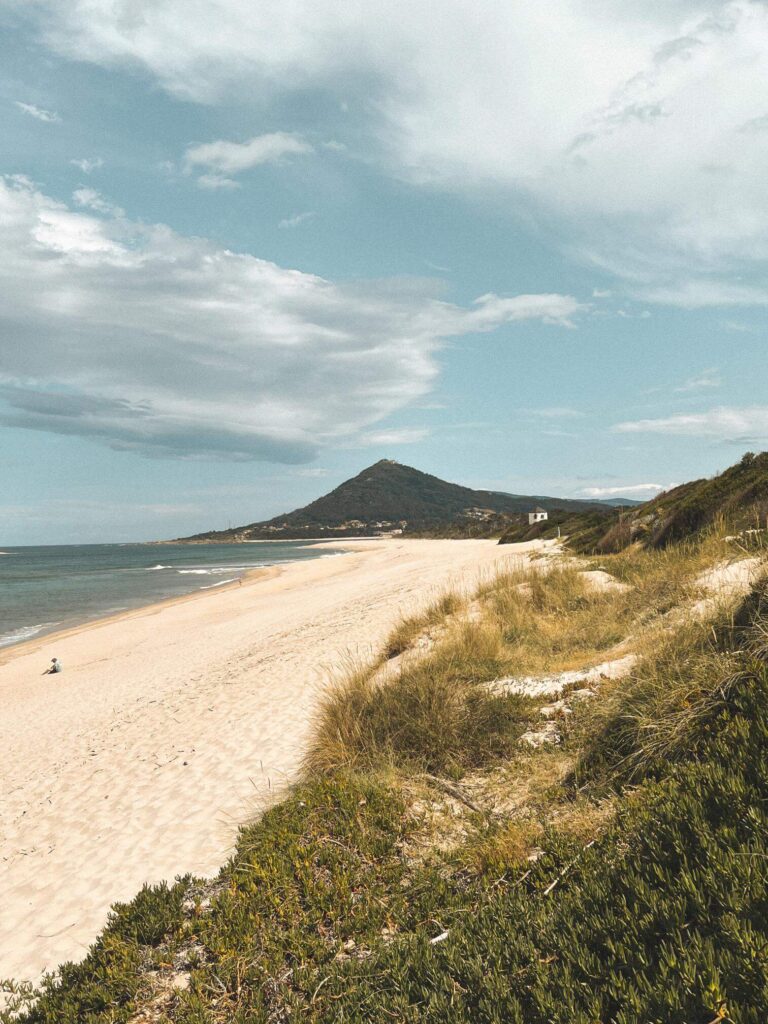
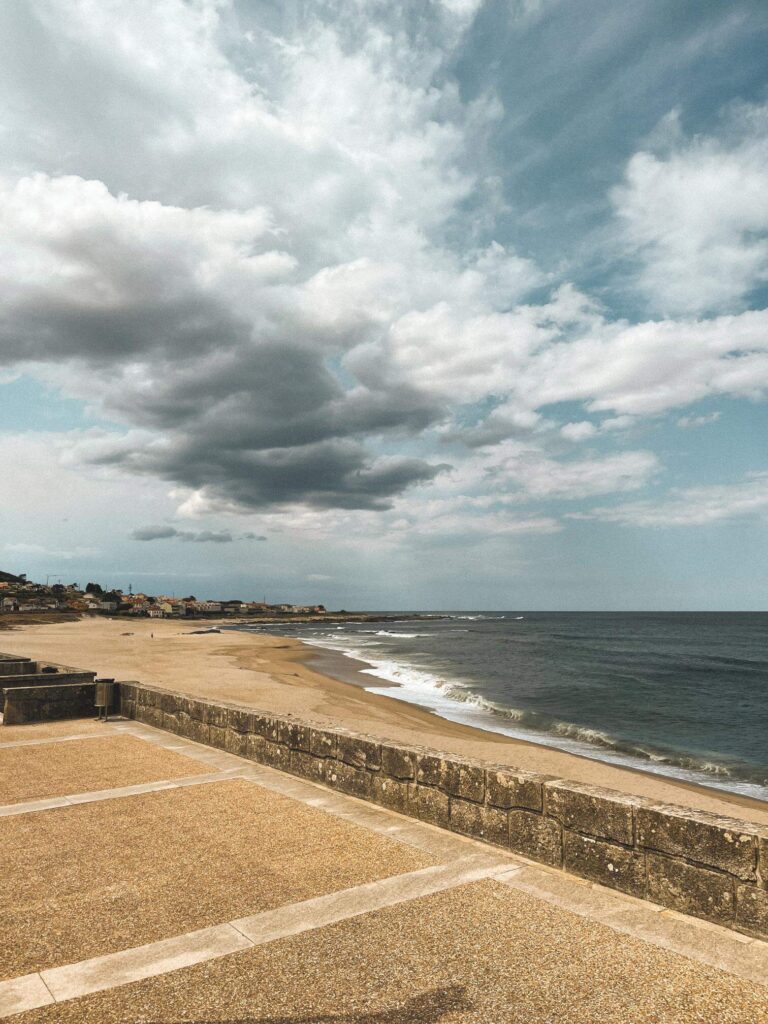
Past the worst of it, the coast opened up again. Apúlia: long sandy beaches, small fishing villages, colourful boats pulled up on the quay. The people were relaxed and friendly in the way that Atlantic fishing towns tend to be. I wanted to stay a night in every single village.
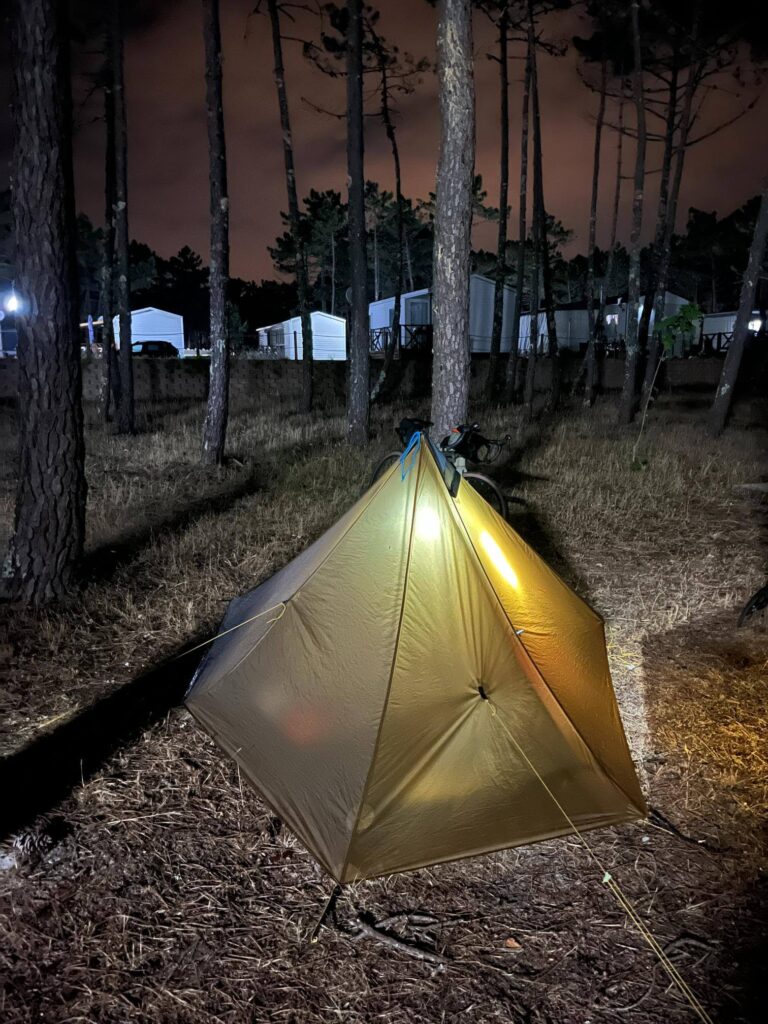
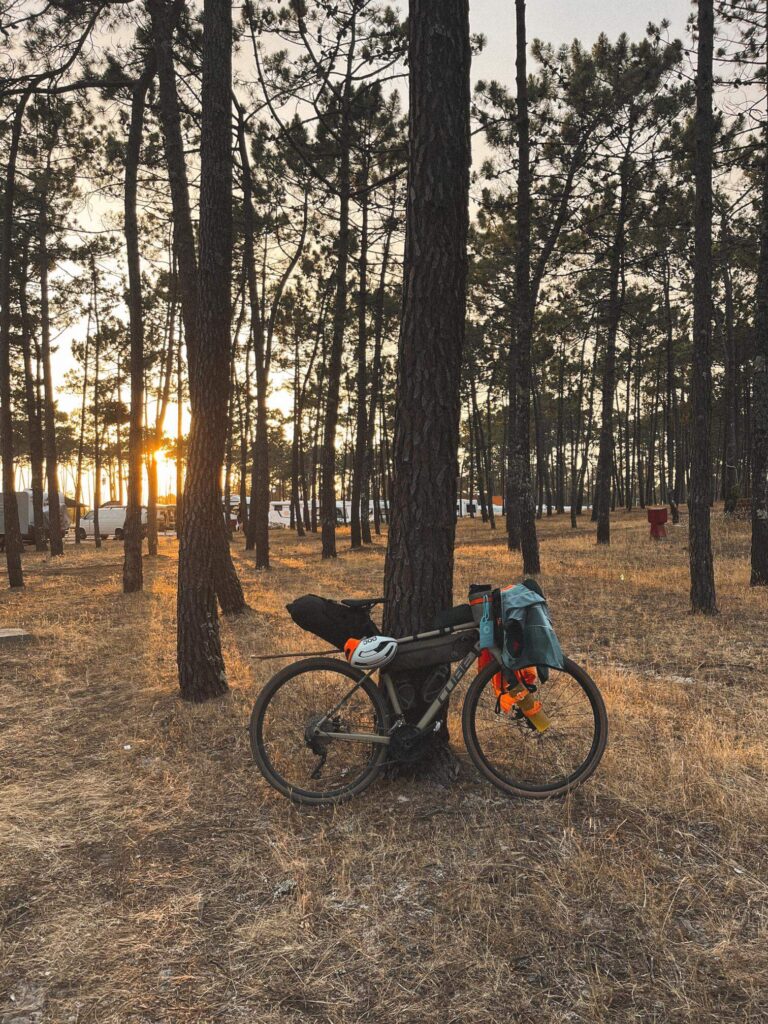
Viana do Castelo looked beautiful from the hill above the city. I noted it for next time, set up my tent at the campsite visible from that same viewpoint, and went to sleep.
Day 6 — Viana do Castelo to Pontevedra (26 May)
The last day. 110 km, 1,100 m elevation — almost identical to day one, which felt right.
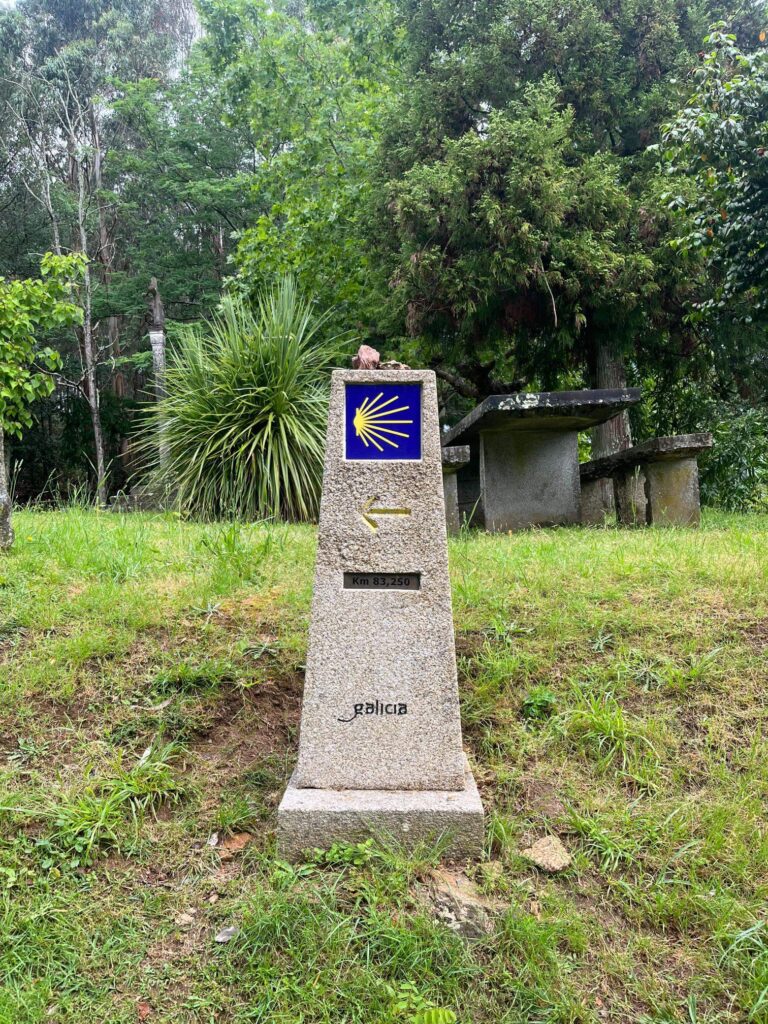
Near the border I realised I was riding the Caminho de Santiago, the Portuguese coastal route to Santiago de Compostela. An old man called out “Bom Caminho!” as I passed him. I stopped at a café a few kilometres from the Spanish border and had a coffee with the scallop shell markers of the Camino around me.
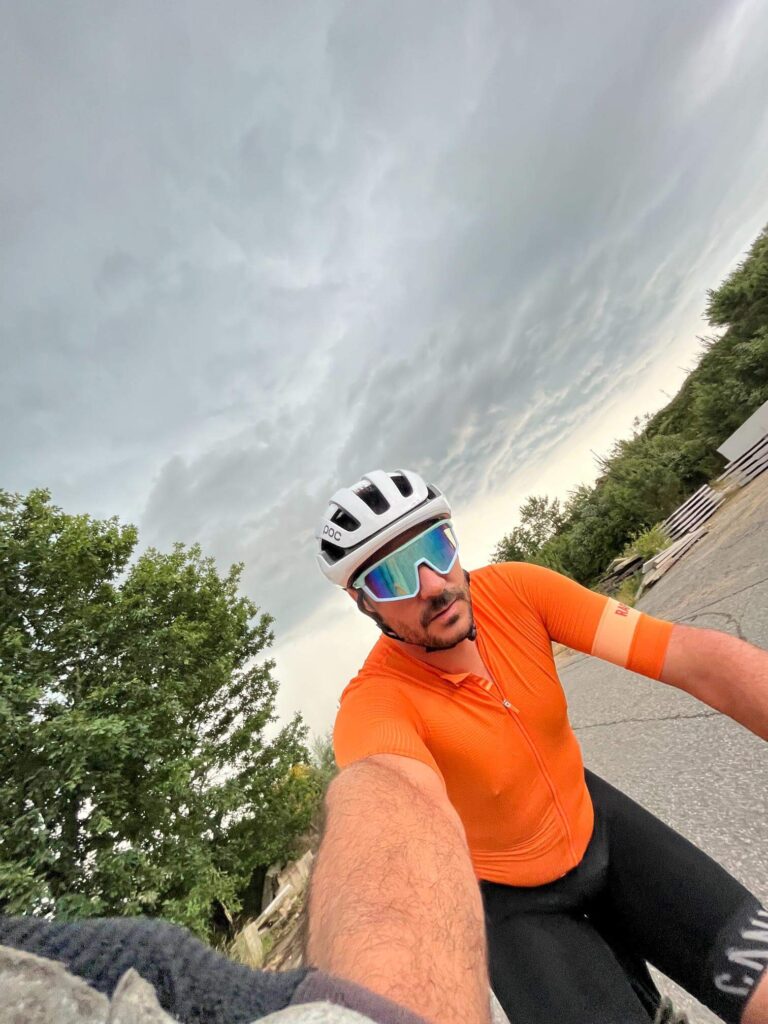
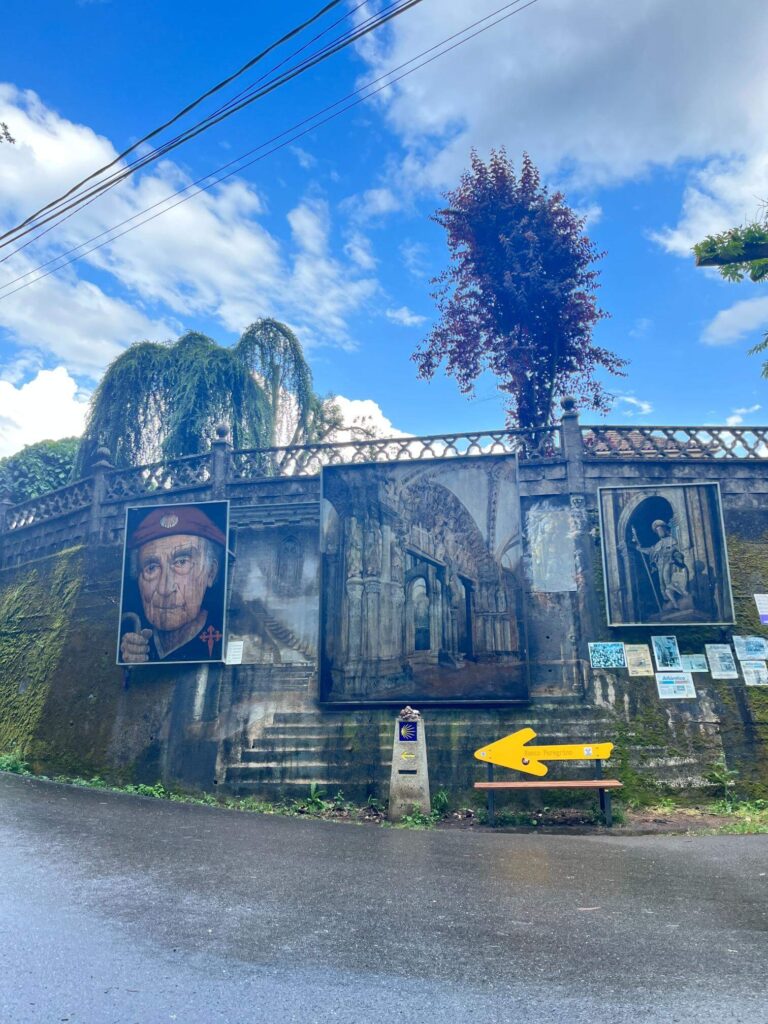
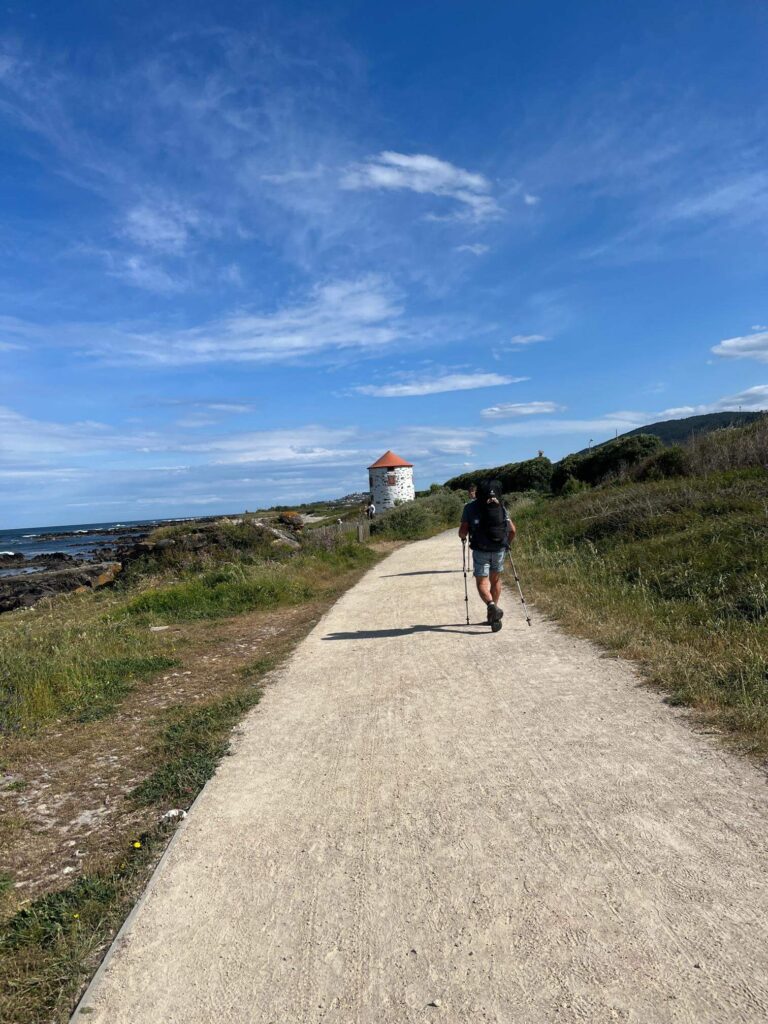
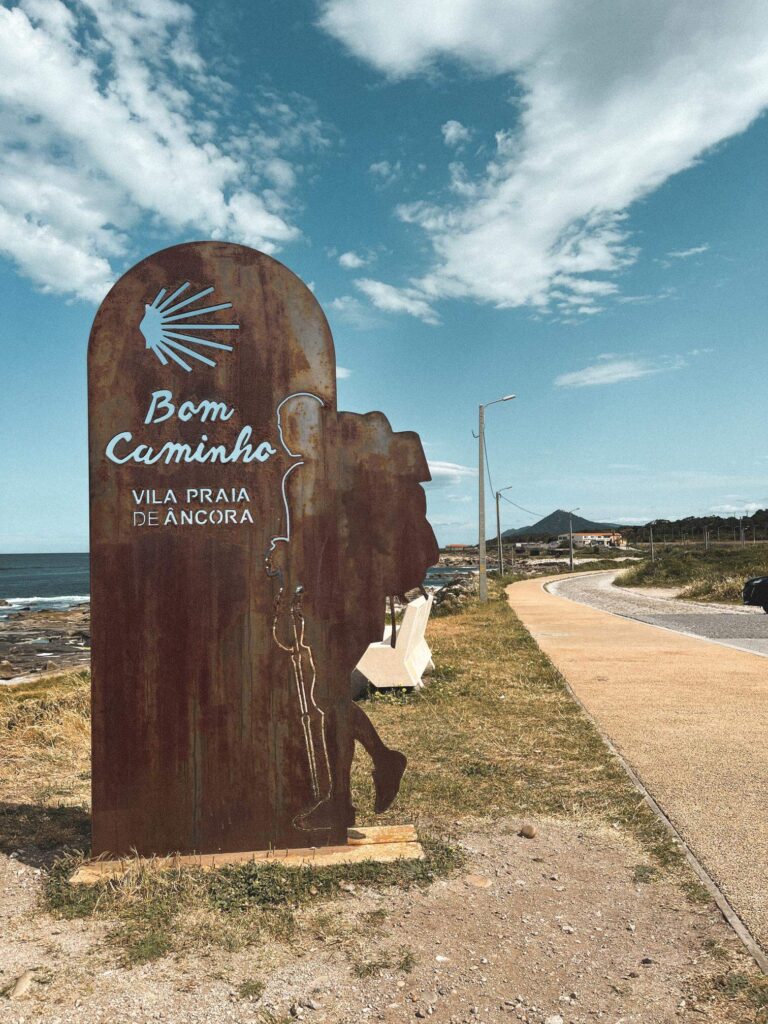
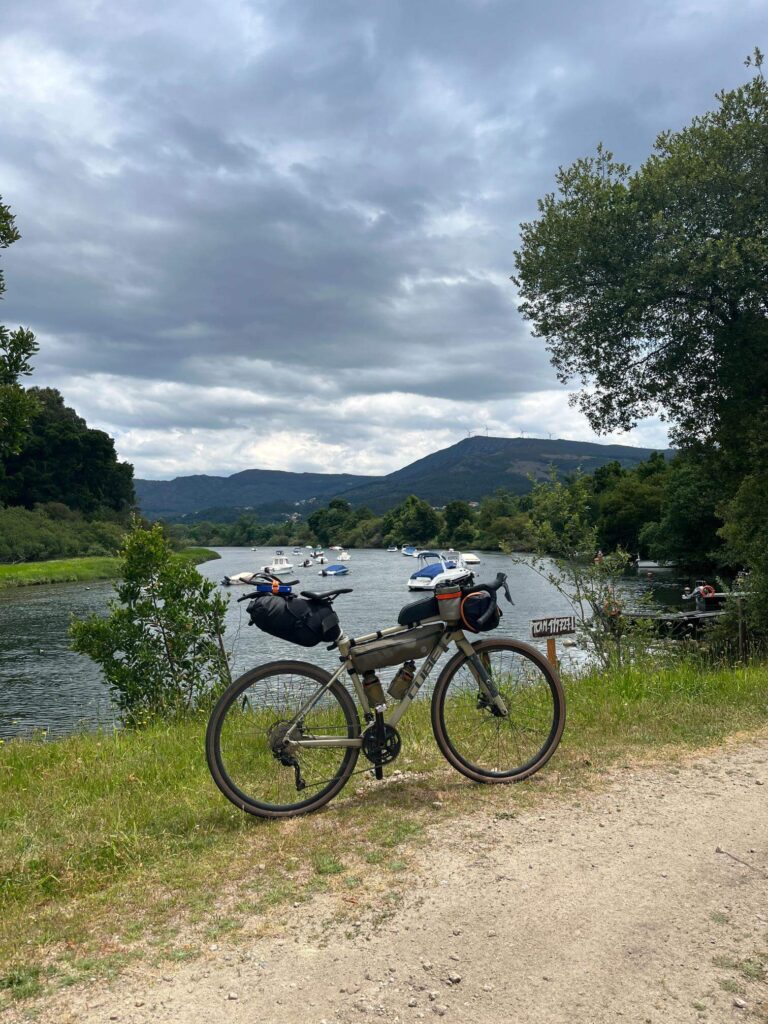
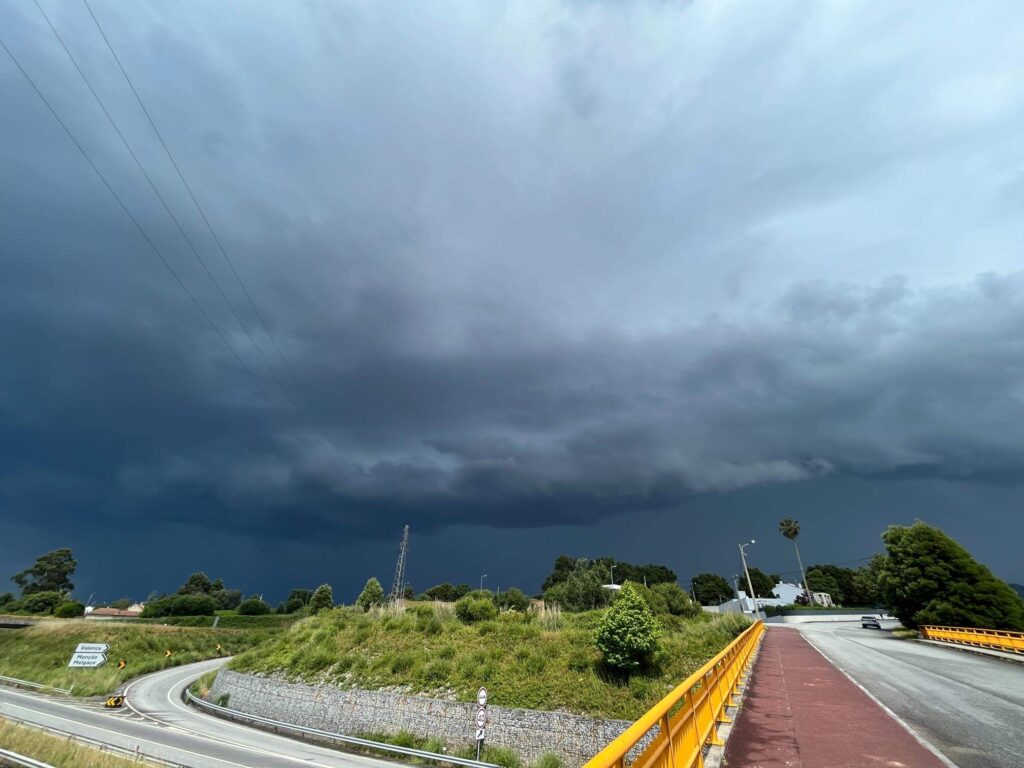
The final stretch came via ancient stone tracks — centuries-old paths that made me grateful for the smoother roads that followed — before green Galician countryside took over and small streams ran alongside the road. When a friend captured me riding in on video, there was a banner: “Let’s celebrate!!”
That was enough. For now.
Notes for the route
For anyone planning to go bikepacking Portugal on this route: the Lagoa de Óbidos gravel section is unmissable. Check whether the bridge near Figueira da Foz has a pedestrian path open before you go, or budget time for the ferry. Porto cobblestones heading north are brutal on a loaded bike — find an alternative exit if you can. And Orbitur campsites along the coast are excellent: no booking needed, three-star facilities, never turned me away.
540 kilometres. Six days. One carbon tent pole sacrificed to the road somewhere in central Portugal.
Worth every kilometre.