By Gabor
 On day five of The Goats I looked down at my Coros Dura and it showed 40% battery. Five days of continuous GPS navigation through some of the most remote terrain in Europe and the thing still had nearly half a tank. I never plugged it in once during the race.
My friend riding alongside me had a different experience. His Garmin Explore II froze twice that day alone. Each time he had to pull over, restart the device, wait for it to come back, and hope the route was still loaded correctly. At 3am on a mountain road in the dark that’s not just annoying — it’s a real problem.
That contrast is what this Coros Dura review is really about.
Coros Dura review: battery life means something different in an ultra
People talk about battery life on GPS devices like it’s a nice-to-have. In ultra cycling it’s a fundamental. Your GPS computer isn’t logging a hobby metric — it’s the thing keeping you on route when you’re riding roads you’ve never seen before at midnight with no phone signal. When it dies, you stop. Full stop.
Before The Goats I’d read the Coros Dura’s claimed 90-hour battery life and assumed it was optimistic marketing. Most specs are. But five days of back-to-back riding with the screen on and navigation running the whole time, and I crossed the finish line with 40% remaining. That’s not a spec sheet number. That’s what actually happened.
I’ve done enough ultras now to know that charging windows are unpredictable. You plan to charge at a café and it’s closed. You arrive at a campsite and there’s no socket near your pitch. You’re moving faster than expected and the charging stop you built into your plan disappears. With the Coros Dura none of that matters. You start the race, you ride the race, it works the whole time.
The Garmin comparison
This Coros Dura review wouldn’t be complete without addressing the alternative most ultra cyclists default to. Garmin makes excellent devices and plenty of riders rely on them successfully. But the Explore II freeze issue is well-documented in the community and it showed up repeatedly during The Goats. My riding partner dealt with multiple freezes over five days, each one costing time and focus at moments when you need neither.
The Coros Dura ran without interruption for the entire race. No freezes, no crashes, no moments of doubt. In ultra cycling, a navigation device you can’t trust is worse than no device at all — because you’re relying on it for decisions that matter.
The display
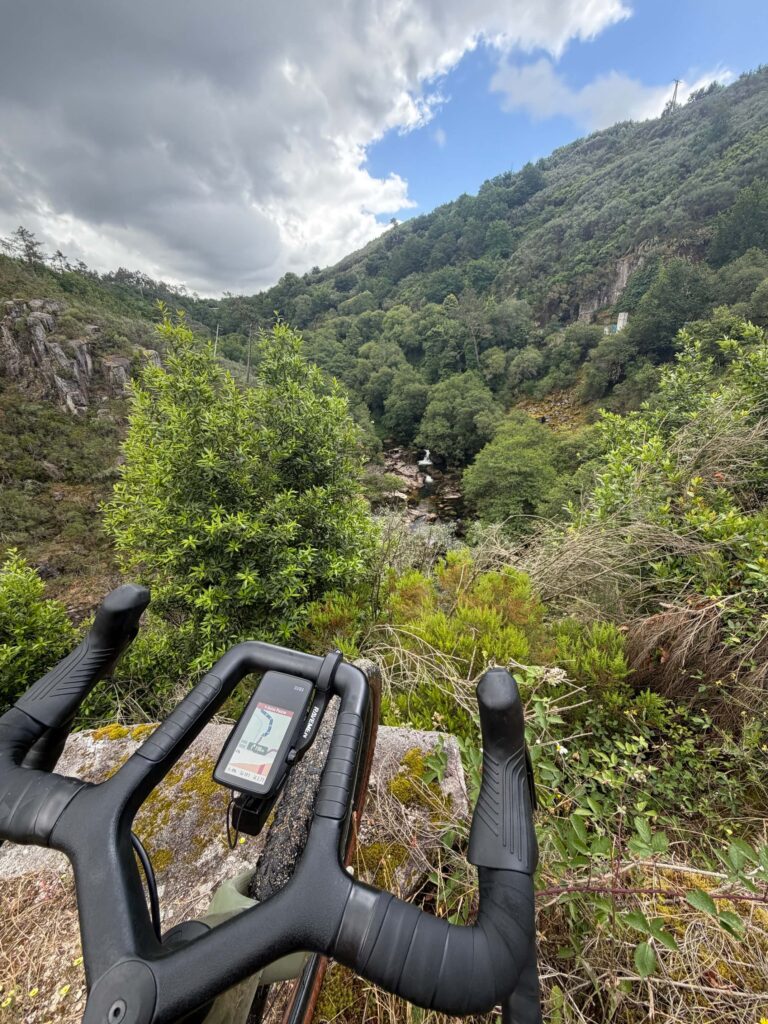
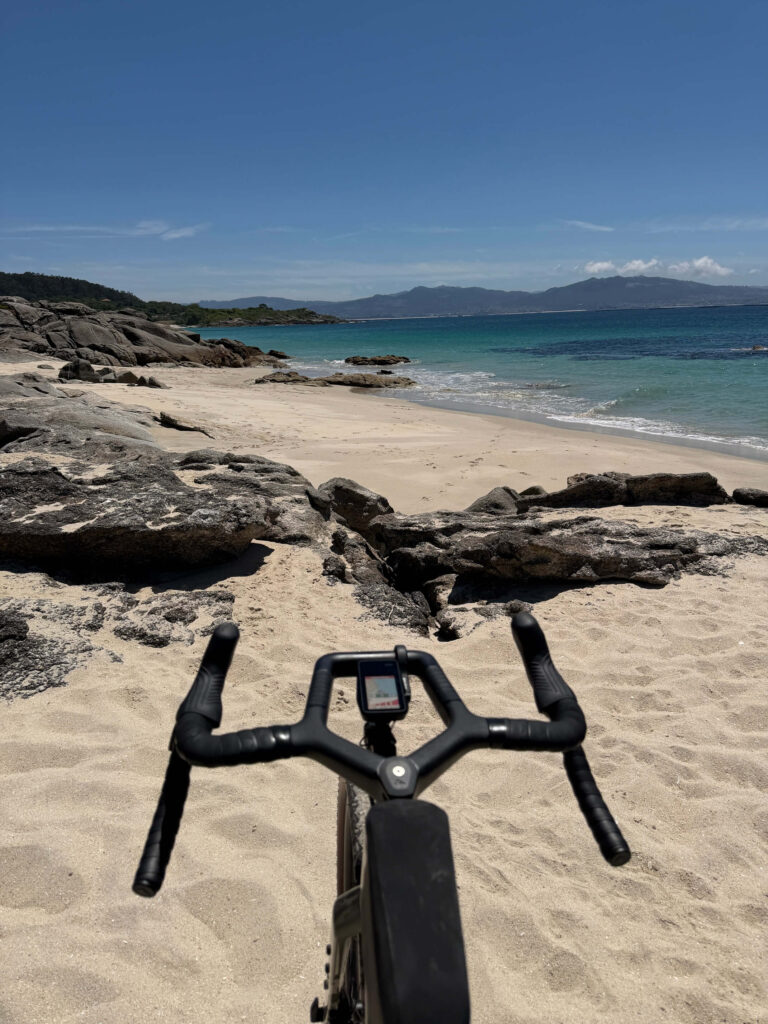
Excellent in direct sunlight — the kind of bright Iberian sun that makes most screens unreadable without cupping your hand over them. I never had to shade the device or angle my wrist awkwardly to read it. At night the backlight activated quickly and didn’t blind me. It behaved exactly like a quality GPS cycling computer should, which sounds like a low bar but isn’t — plenty of devices fail this basic test in real conditions.
Loading the route
I loaded the GPX through the Coros app before the race. It synced fast, no issues. Before a big race you’re already juggling kit checks, travel logistics, briefings, sleep — the last thing you want is to spend an hour fighting your GPS device over a file format. The Coros Dura didn’t ask me to fight it.
The one thing that bothered me
The scroll knob on the side is too sensitive. On smooth tarmac it’s fine. On pumpy gravel — which is most of what you ride in a race like The Goats or Badlands — the vibration activates it and you end up on a screen you didn’t want. I adapted within the first day but it’s a genuine design flaw for gravel racing specifically. A stiffer dial with more resistance would fix it completely. Coros, if you’re reading this: that’s the next version sorted.
That’s my only complaint after five days of hard use in a Coros Dura review that could easily have surfaced more. One knob. Everything else was solid.
Who the Coros Dura is for
If you ride day events or weekend trips, most GPS computers will do the job. But if you race ultras, do multi-day bikepacking, or regularly ride in places where you can’t guarantee a charging stop, the Coros Dura is in a different category. The battery performance alone justifies it. The reliability on top of that makes it an easy decision.
The short version
Five days. Continuous navigation. 40% battery at the finish. No freezes, no restarts, no moments where I looked down and wondered if the device was going to make it.
The Coros Dura review verdict is simple: this is the GPS computer I use and the one I’d tell any ultra cyclist to buy. Fix the knob and it’s perfect.