By Gabor
 The Badlands race had been on my list for a long time. After finishing Gravel Birds and a failed attempt on The Goats, I knew this was the next one I wanted to do. I heard spots fill up fast, so I made sure to be among the first to apply.
The heat was the thing I feared most. The Badlands race is famous for the temperatures in the Gorafe and Tabernas deserts, and I had no interest in travelling all the way to southern Spain just to abandon because my body couldn’t handle 40°C on a bike. I live in Portugal, so whenever a heat wave rolled in I went out and rode the mountains. Not because I enjoyed cooking on a gravel bike — I didn’t — but because I needed to know my body could handle it. By the time the Badlands race came around I felt ready. As it turned out, the 2025 edition was fairly mild by Badlands standards. Plenty of riders complained about the temperatures. I was quietly grateful for every degree I’d suffered through in training.
The plan
I’m not a pro athlete. I’m not really an athlete at all. So finishing the Badlands race in 5 days was the goal — ambitious enough to keep me moving, realistic enough that I believed in it.
I imported the GPX into Komoot and broke the route into five days. The numbers were sobering: some days required 150 km with over 3,000 m of climbing. The most I’d ever done in a single day was 180 km and 3,200 m on The Goats, so I knew it was within reach — but only just. I studied the route carefully, marking resupply points and potential sleep spots before I even packed a bag.
The bike and kit
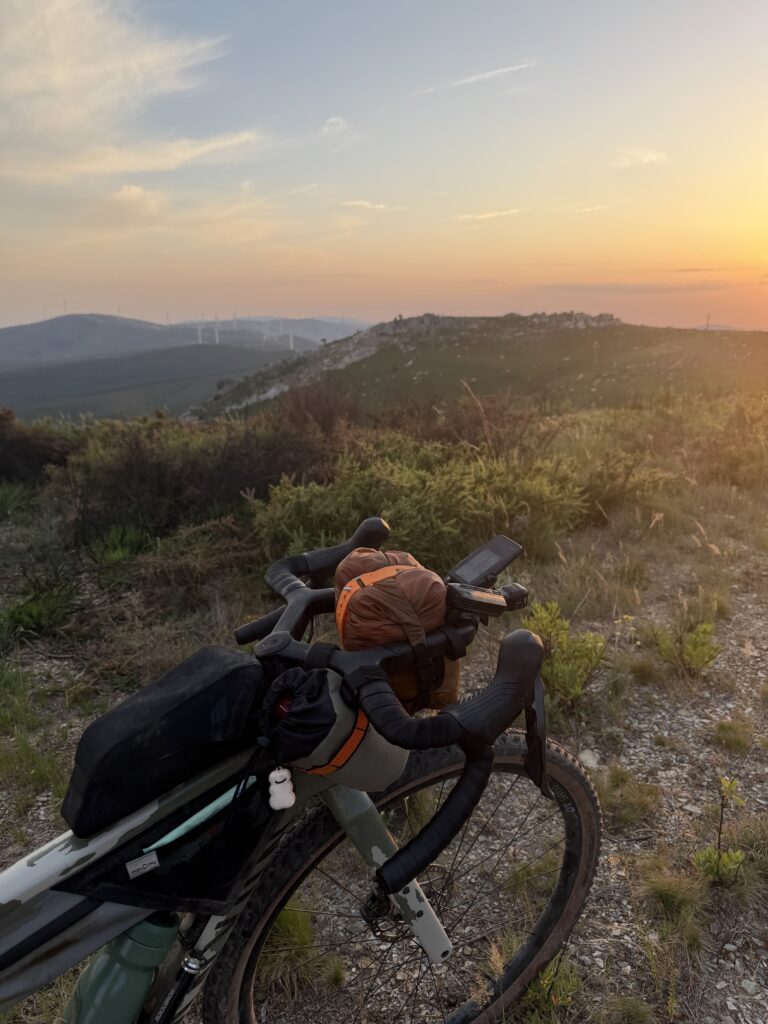
I rode a Canyon Grizzl Escape with a 32-51 chainring and a 48T cassette. That low gearing was not a luxury on the climbs of southern Spain — it was essential. I’m not a climber and I knew it going in.
Sleep system: inflatable mattress, emergency bivvy, sleeping bag. My down jacket doubled as a pillow, which worked better than it sounds.
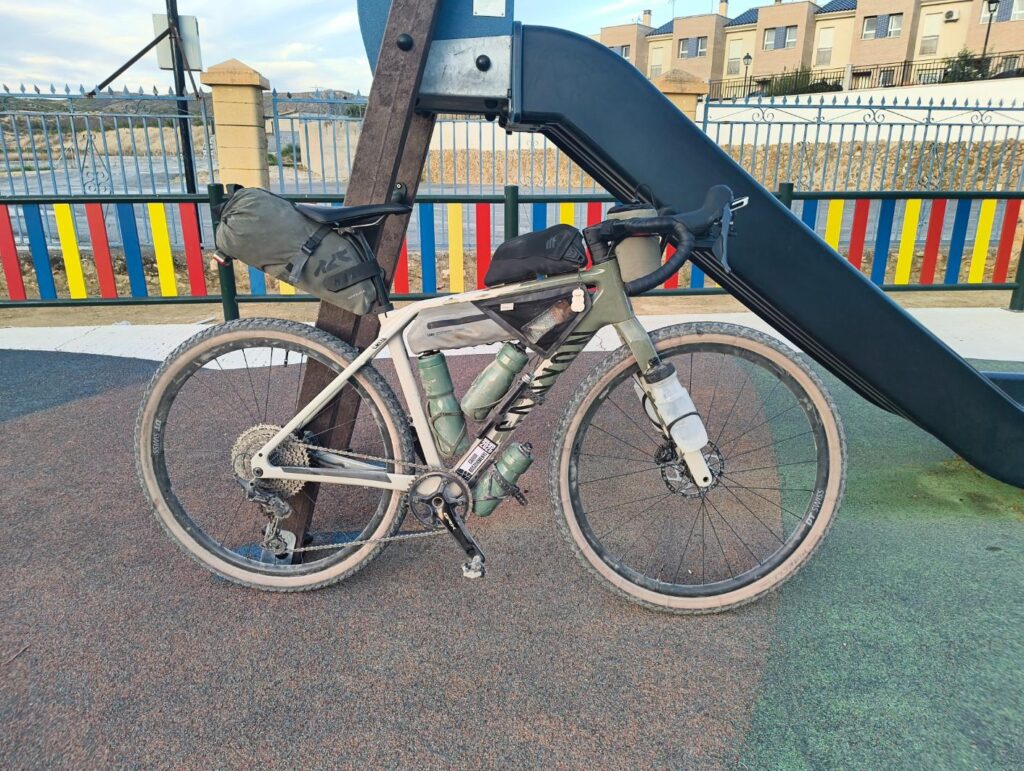
Water capacity: 4.5 litres, though I only ran the full load on the long desert stretches between resupply points.
Lighting: two 900-lumen lights and a headlamp. On the Badlands race you will ride in the dark. A lot. More than you expect.
Clothing: one spare bib short, jersey, and socks. I didn’t bring civilian clothes, which I got away with — but I missed having a pair of boxers to sleep in. Small thing, but worth noting for next time.
Medical: alcohol pads, medical tape, ibuprofen, wet wipes, toothbrush and toothpaste.
Mechanicals: spare derailleur hanger, chain links, bolts, multi-tool, zip ties, tubeless repair kit, and two small bottles of chain lube. I went through both bottles. The Badlands race eats chains.
Briefing
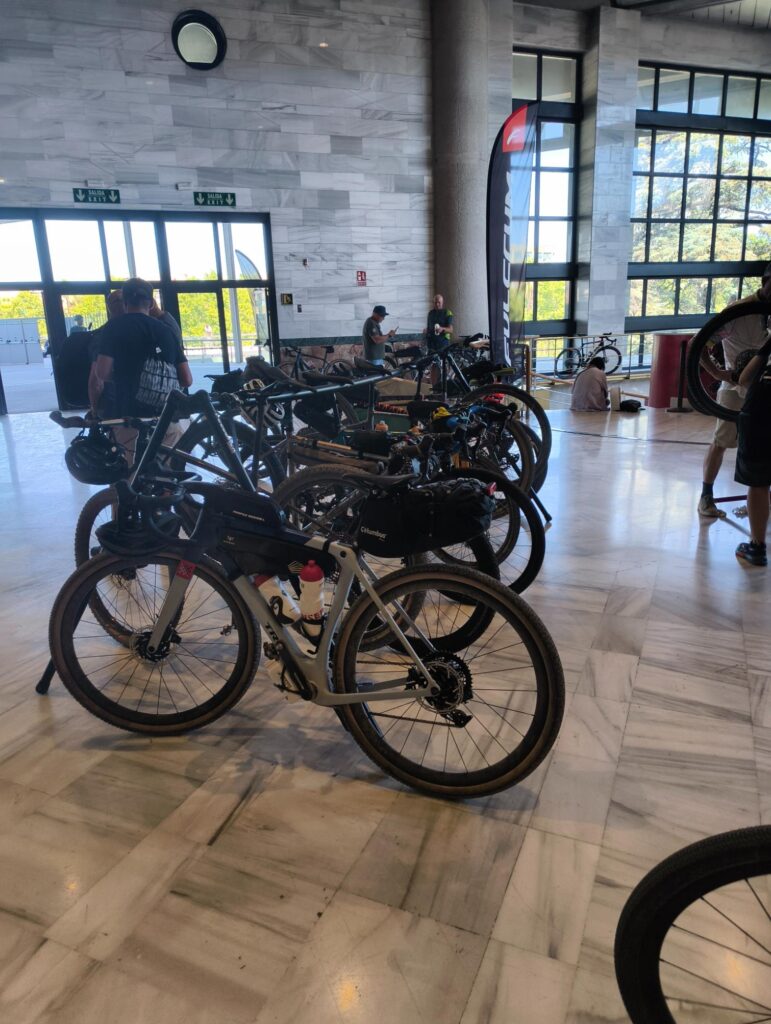
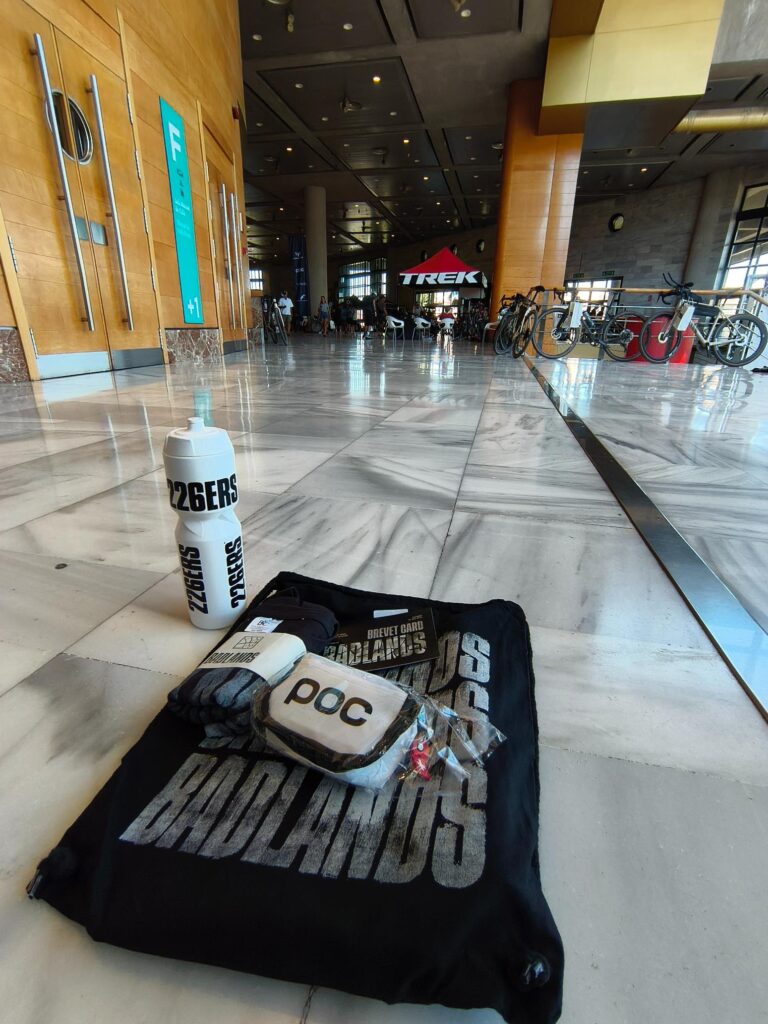
I arrived in Granada with some friends, picked up the welcome package at the briefing, and was genuinely surprised by the amount of gels and food the organisers included — useful across the whole event. Granada was already hot by early evening, so I went back to the hotel, built the bike, and tried to sleep.
Day 1 — Granada to Villanueva
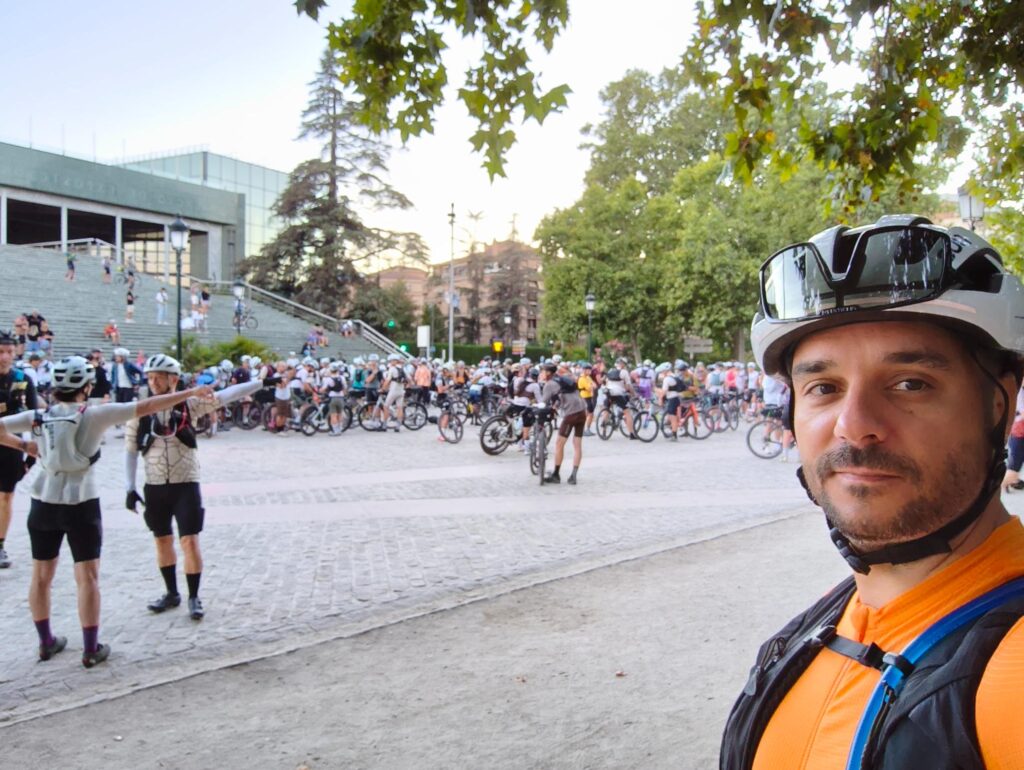
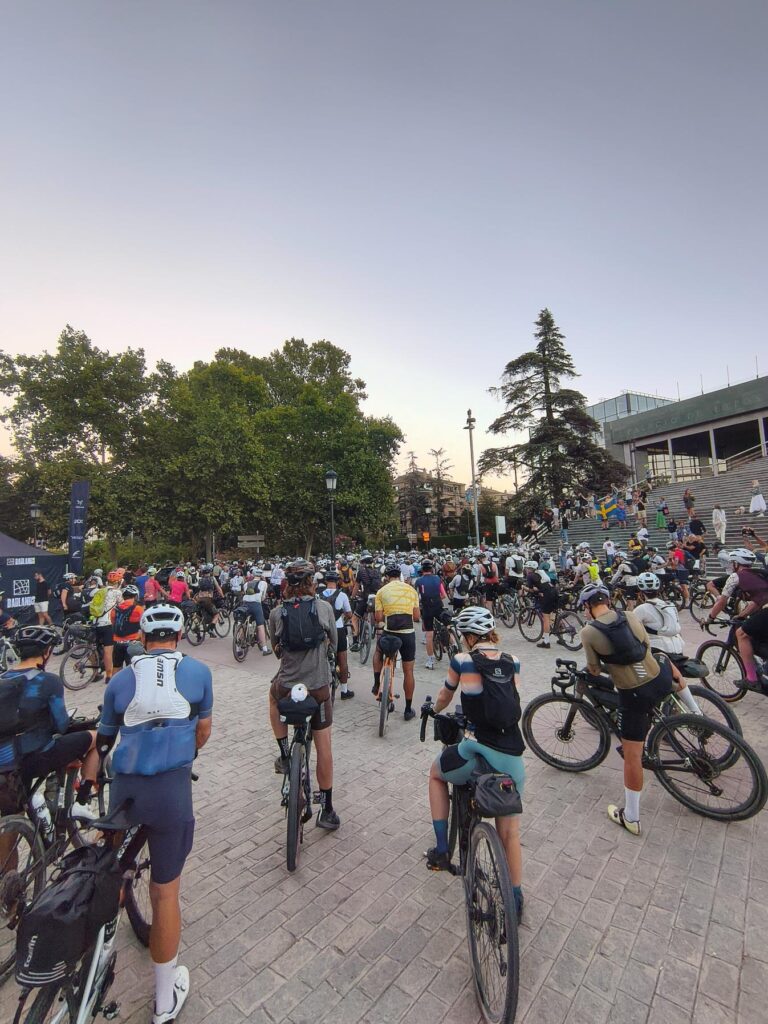
We rolled out from the Mercado de San Agustín at 7:30am. The temperature was mild — almost cold — which felt like a gift given what was coming later. I was nervous. The first 20 kilometres included a 10 km climb straight out of the city, and I knew there were more behind it.
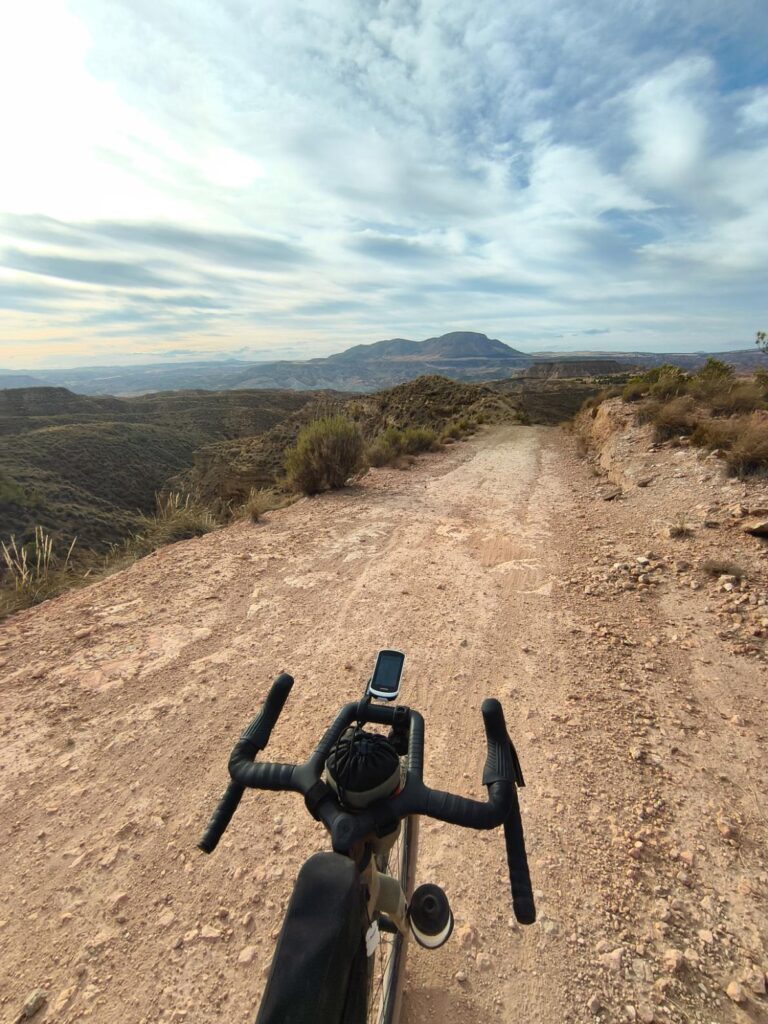
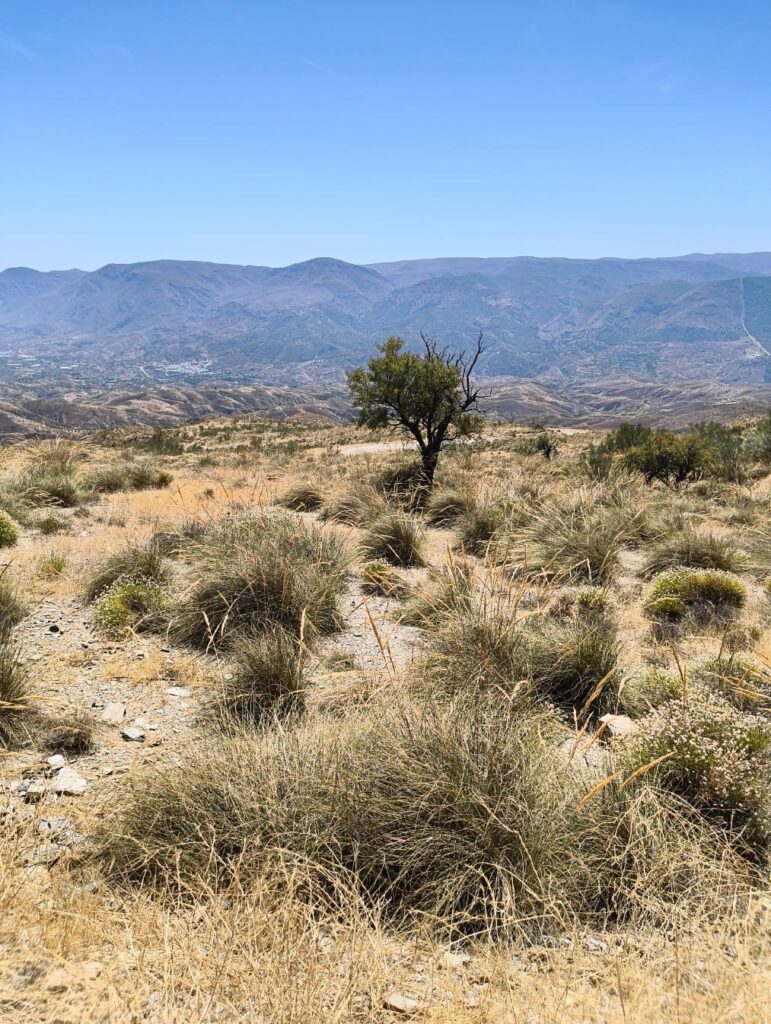
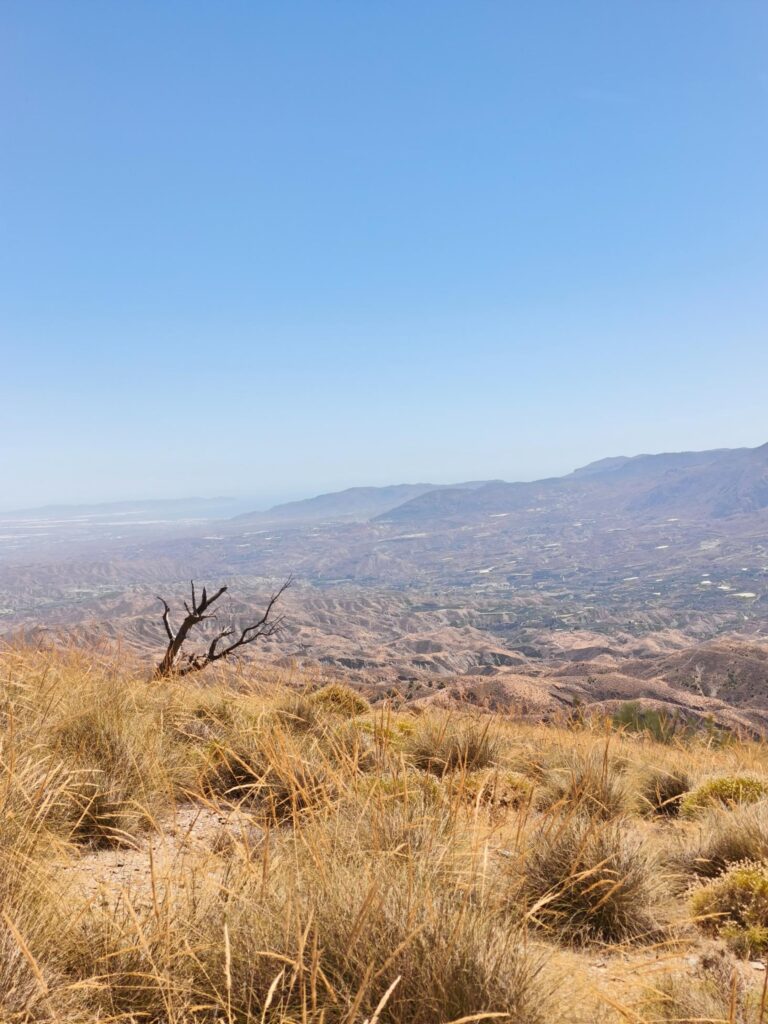
But things went well. I felt strong, even if I was near the back of the field. The route climbed through beautiful pine forests, and somewhere on the first big ascent I caught my first glimpse of the Gorafe desert below — a vast orange and ochre basin that looked almost unreal from above. The Badlands race earns its name early.
At 60 km I reached La Peza, the first real village on the route. Riders were clustered at the bar — bocadillos, Fantas, the usual. I ordered two of each, refilled my bottles at the fountain outside, and got moving before I could get too comfortable.
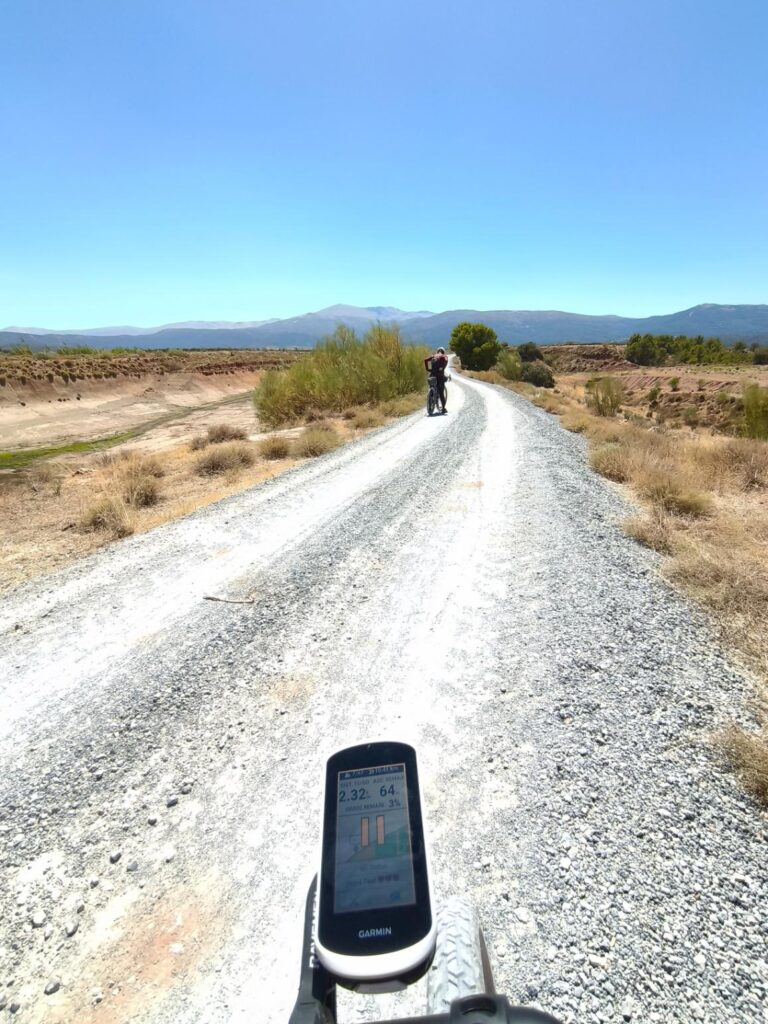
The heat arrived properly in the afternoon. I stayed on top of fuelling and made sure to take a salt tablet whenever I felt myself sweating heavily. In ultra racing in the heat you lose minerals fast, not just fluid, and if you let that deficit build you’ll be dealing with cramps you can’t pedal through.
The Gorafe desert was stunning — I was moving fast with a tailwind pushing me through it, which was lucky because I didn’t stop for photos. My goal was to reach the village of Gorafe before dark, eat a proper dinner, and then cover the remaining 40 km to Villanueva with a pair of Brazilian riders I’d fallen in with. Good guys.
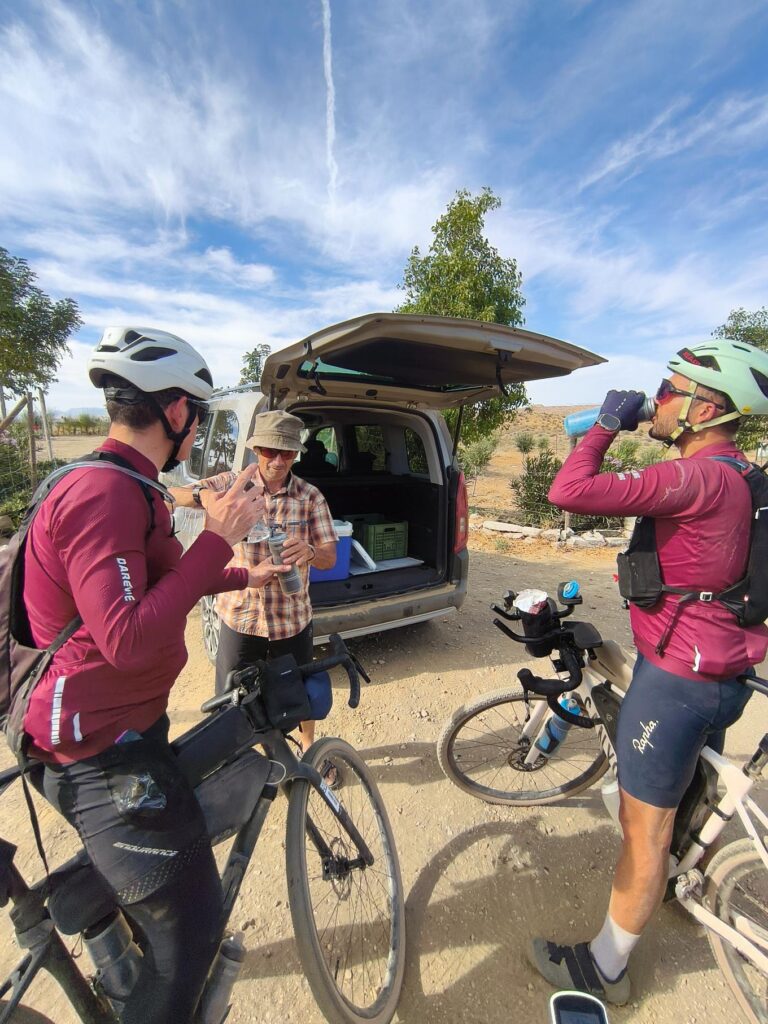
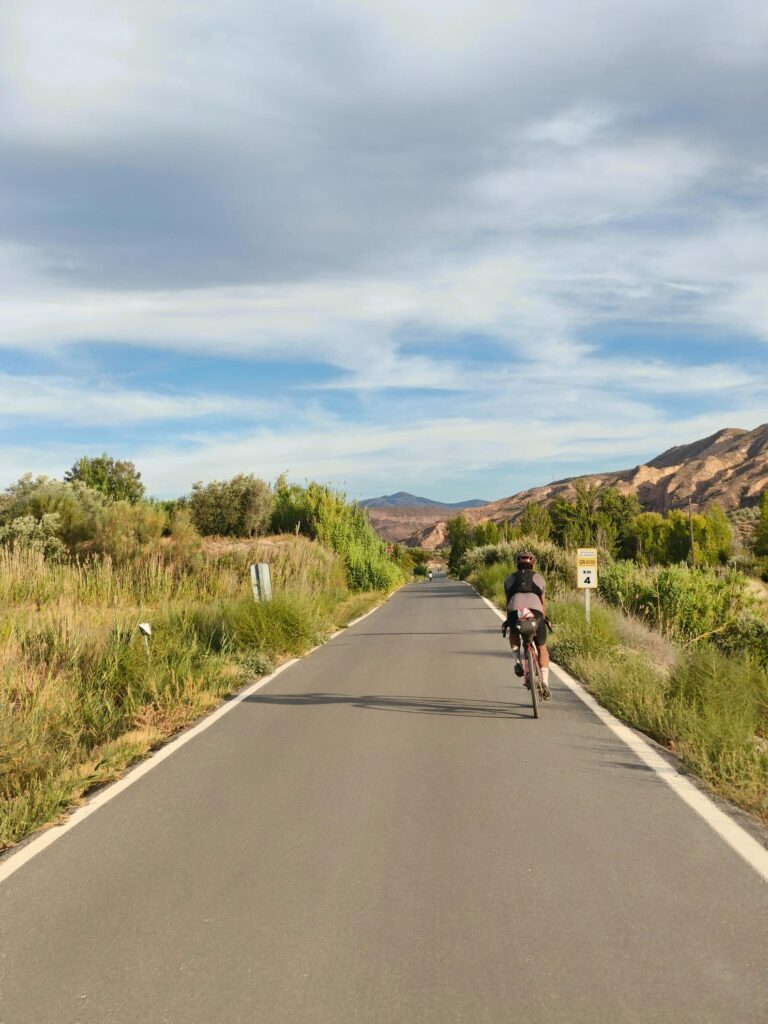
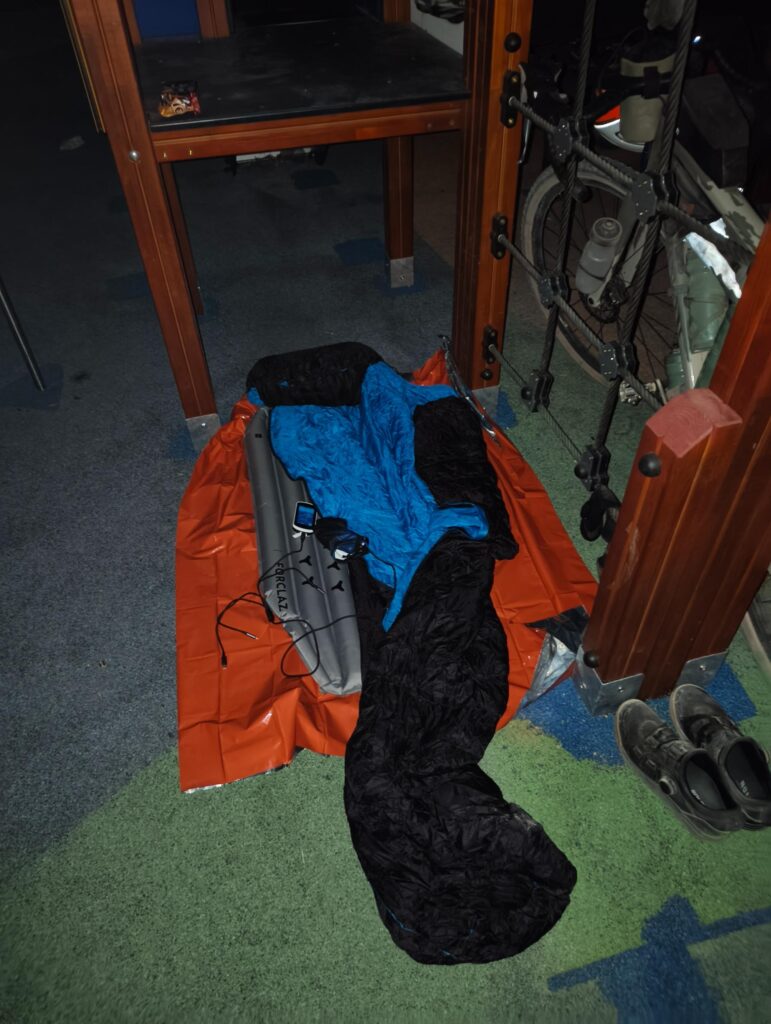
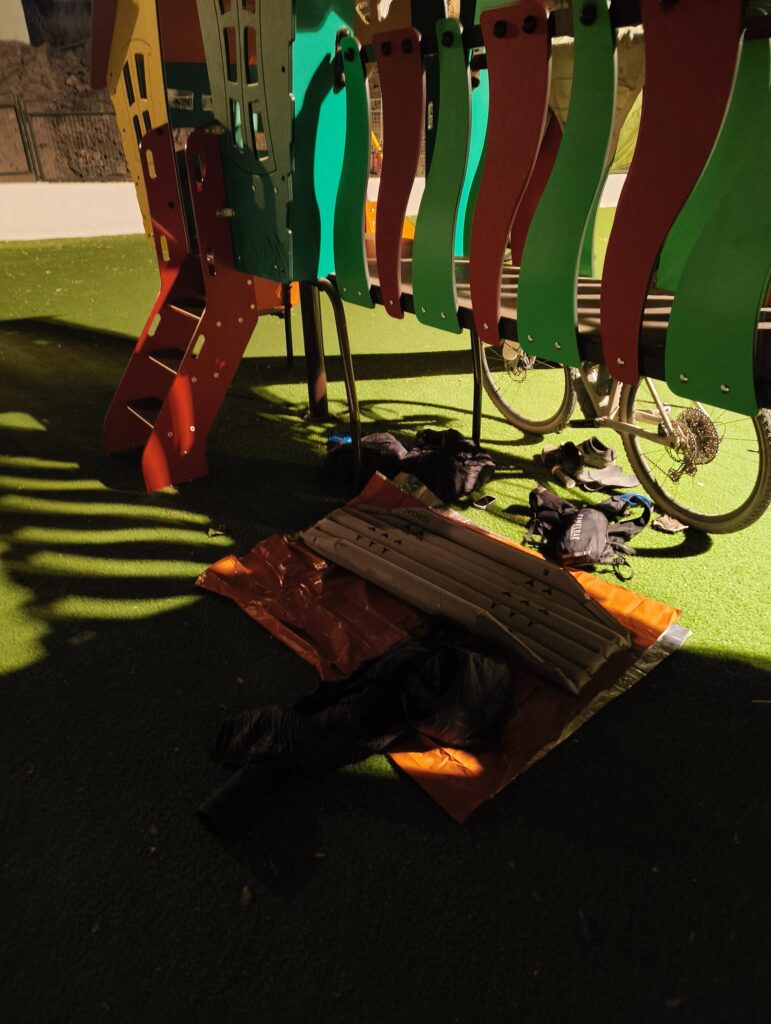
We pushed through the dark together, the route rolling and occasionally sketchy, and arrived to find a playground waiting for us. In ultra cycling, a playground is a five-star hotel: flat, sheltered, and usually with insulated ground underfoot. We slept well enough, mosquitoes notwithstanding.
Day 2 — Villanueva to Velefique via Calar Alto
The morning light over the desert was the kind of thing that makes you remember why you do this. I climbed out of the basin on a track that wound up through scrub and loose rock, the Gorafe landscape spreading out below as the altitude increased. At 40 km I stopped in Gérgal for an ice cream — I’d skipped it the day before and wasn’t making the same mistake twice.
The route completed the Gorafe loop, swinging back toward the desert before arriving at Gor. The village had clearly prepared for the Badlands race: a restaurant and supermarket both open around the clock, riders filling tables and refuelling. I ordered chicken with salad and ate a bowl of peaches on top of it. Then I lubed the chain and left at 6pm. I wanted to be at my sleep spot by midnight.
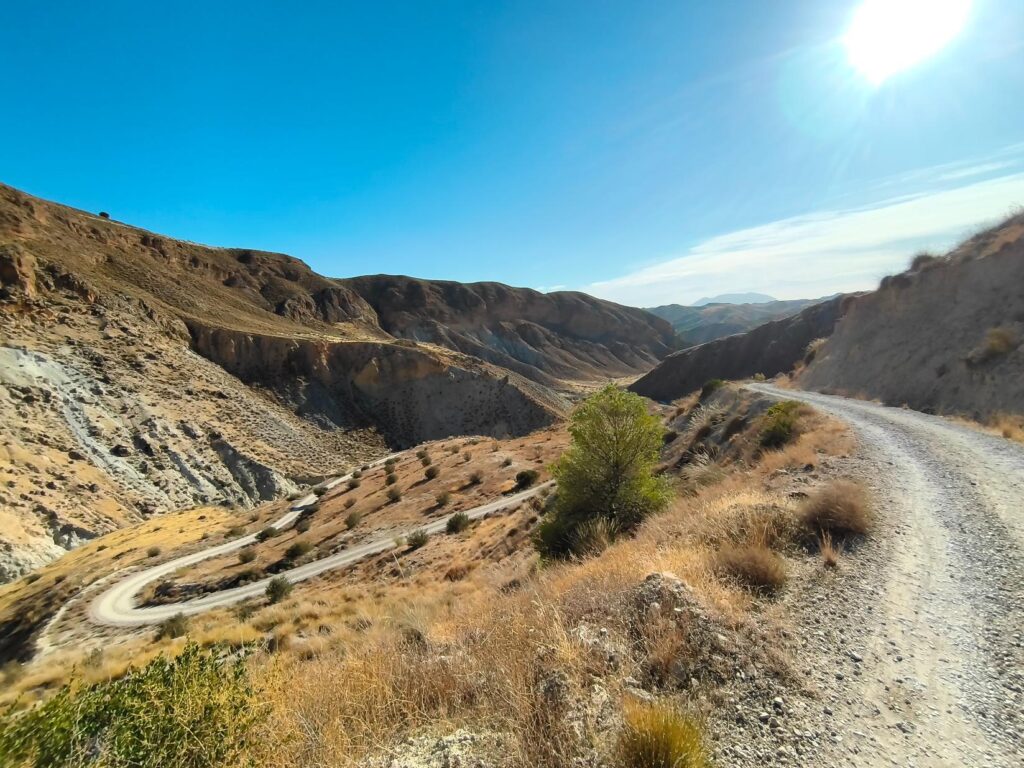
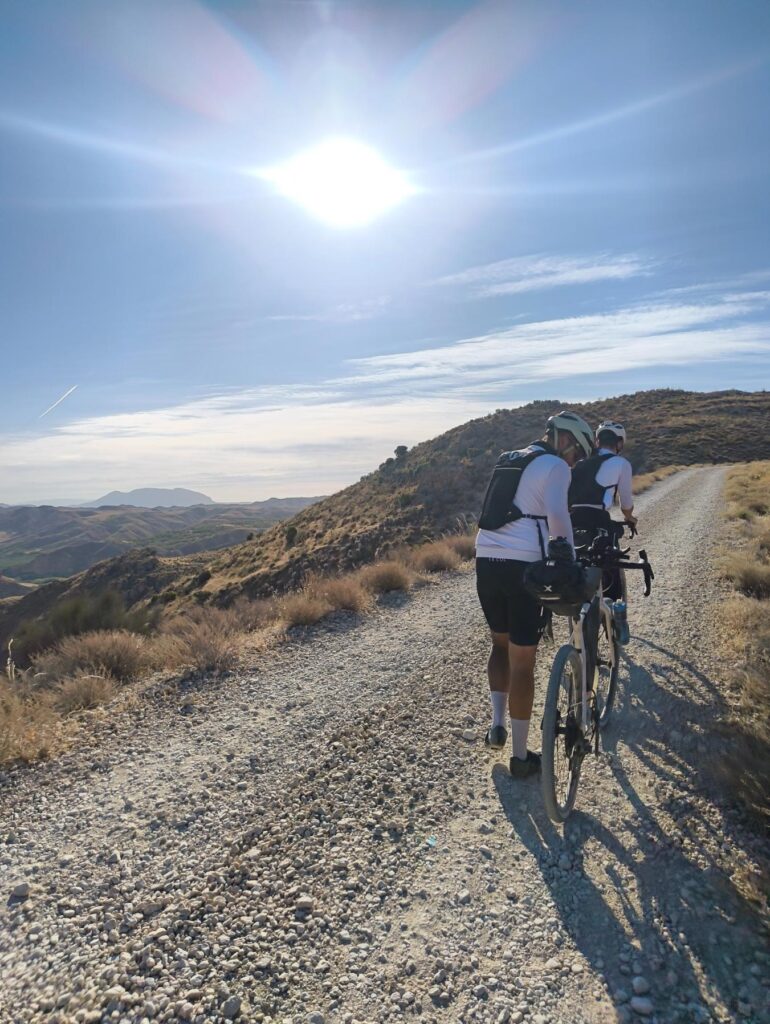
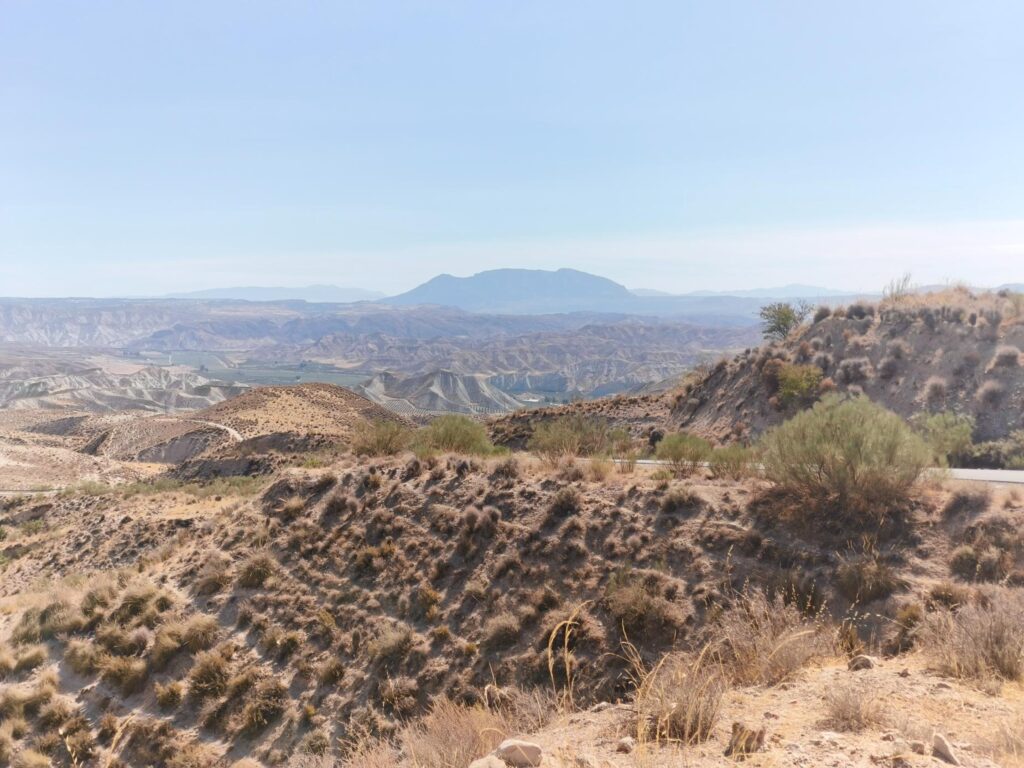
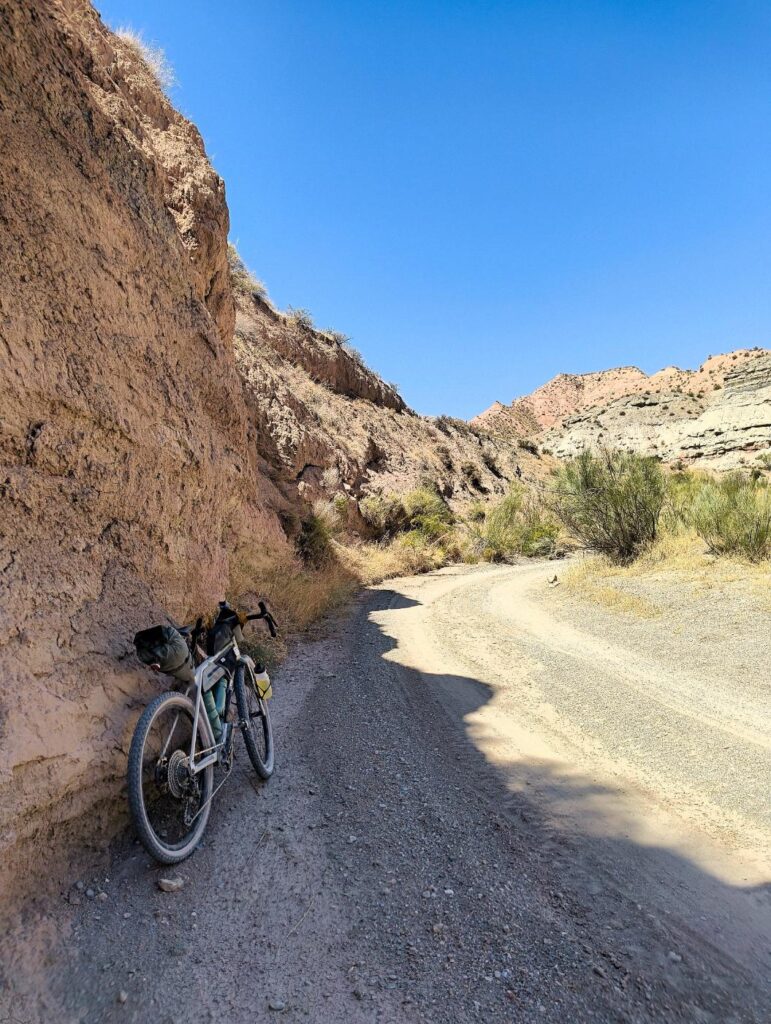
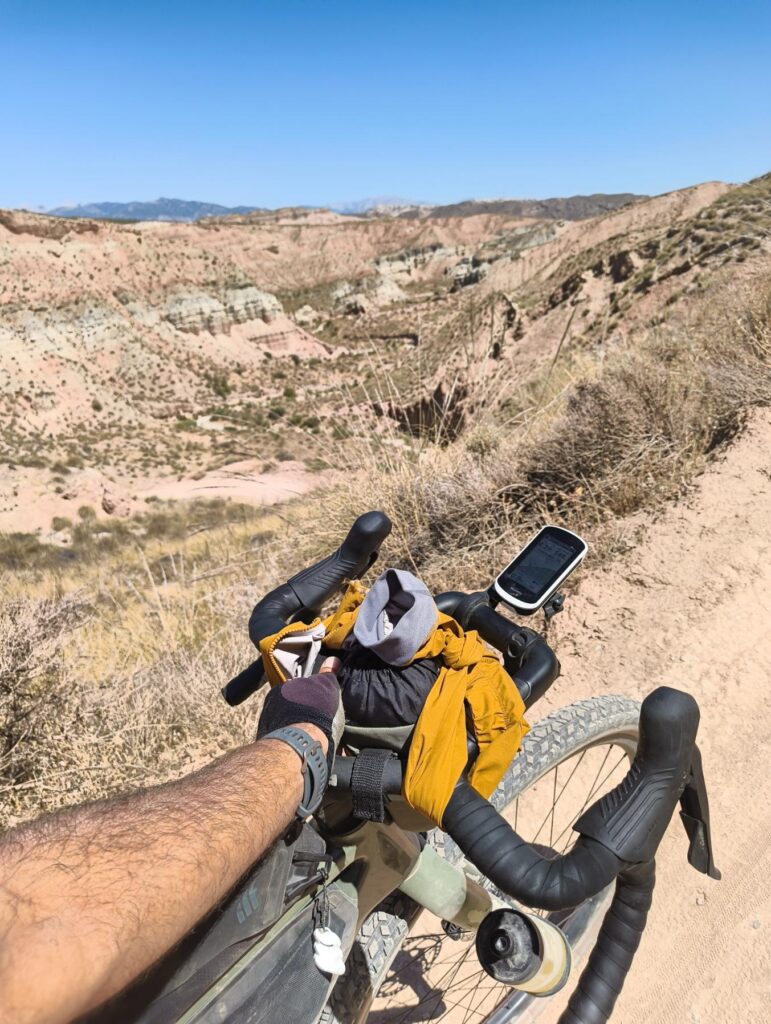
The climb to Calar Alto — nearly 1,000 m of elevation gain — started steep and then settled into a long, consistent gradient on wide smooth gravel. With a steady rhythm it was manageable. There were three major climbs in total, and I spent the last 30 km in complete darkness, navigating by headlamp through forests and meadows that all started to look identical. At one point I genuinely believed I was riding in circles — the same trees, the same clearing, over and over. I wasn’t, but sleep deprivation plays tricks.
I reached the observatory at the summit at 1:30am, exhausted but satisfied. Then came the descent — which I’d assumed would be smooth tarmac and turned out to be rough gravel and sandy forest tracks. By the time I finally hit real road I was frozen, both jackets on, teeth chattering. But Velefique appeared at the bottom of the serpentines smelling of flowers, and a bench outside was waiting. Three hours of sleep.
Day 3 — Velefique to Agua Amarga
I was moving again by early morning, alone on the road for the first 30 km as the sun came up over the Tabernas landscape. There’s something about being the only person on a gravel road at dawn that makes the Badlands race feel like it belongs to you for a moment.
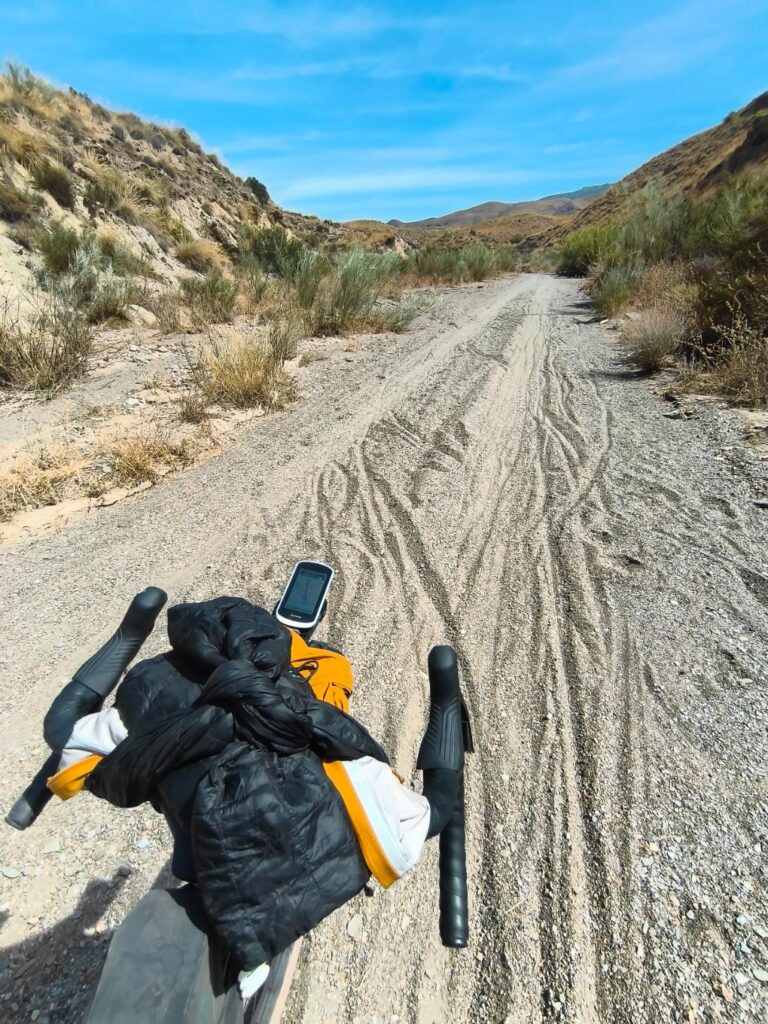
Uleila del Campo brought a table full of other riders and a large salad with tuna, boiled eggs, and enough lemon Fanta to restore some semblance of function. Then south into the Tabernas desert — the route following dry riverbeds through a landscape that felt like it had been lifted from a different continent. Hot, sandy, and genuinely difficult in places. I stopped for 10-minute breaks in whatever shade I could find but kept them short.
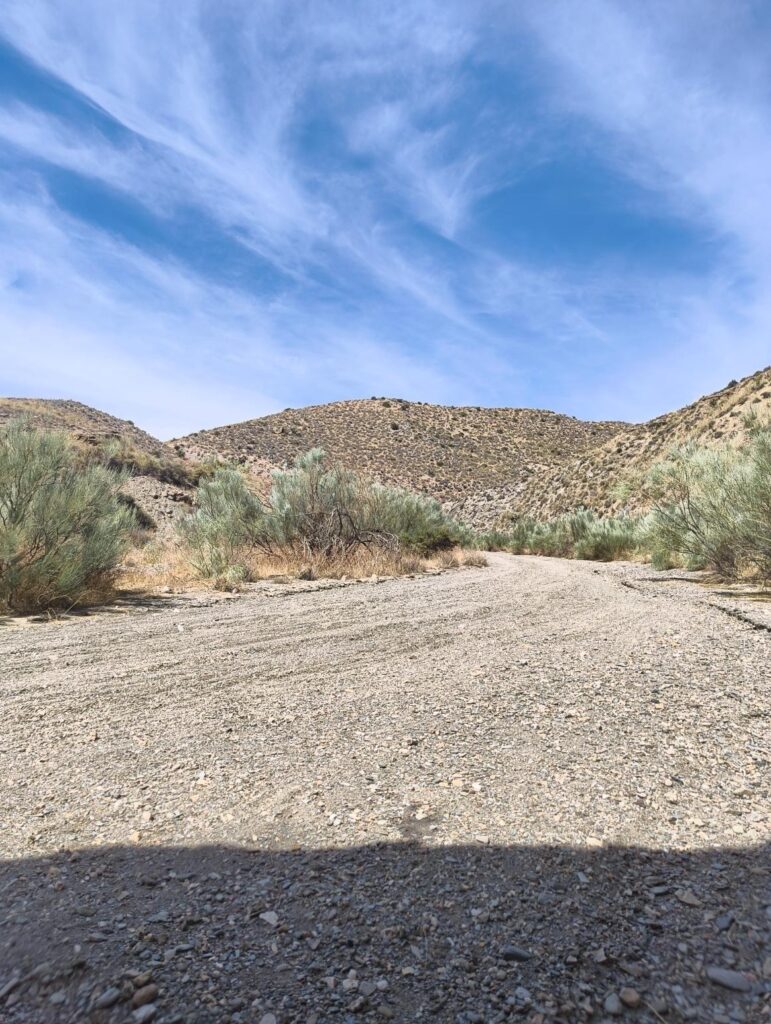
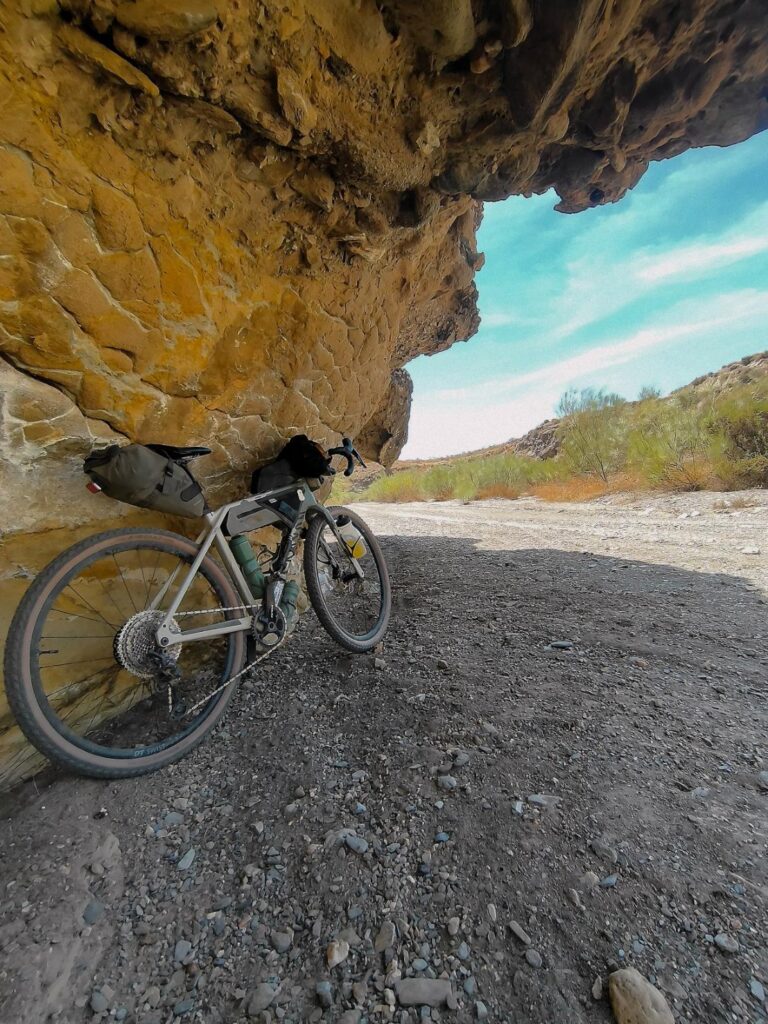
After Lucainena de las Torres a lovely descent on a dedicated cycleway gave my legs a rest before the road pointed upward again toward El Saltador Alto. By this point the sun was getting low and I was getting tired — most of the steepest sections I walked rather than rode, which I have no regrets about. Forward is forward.
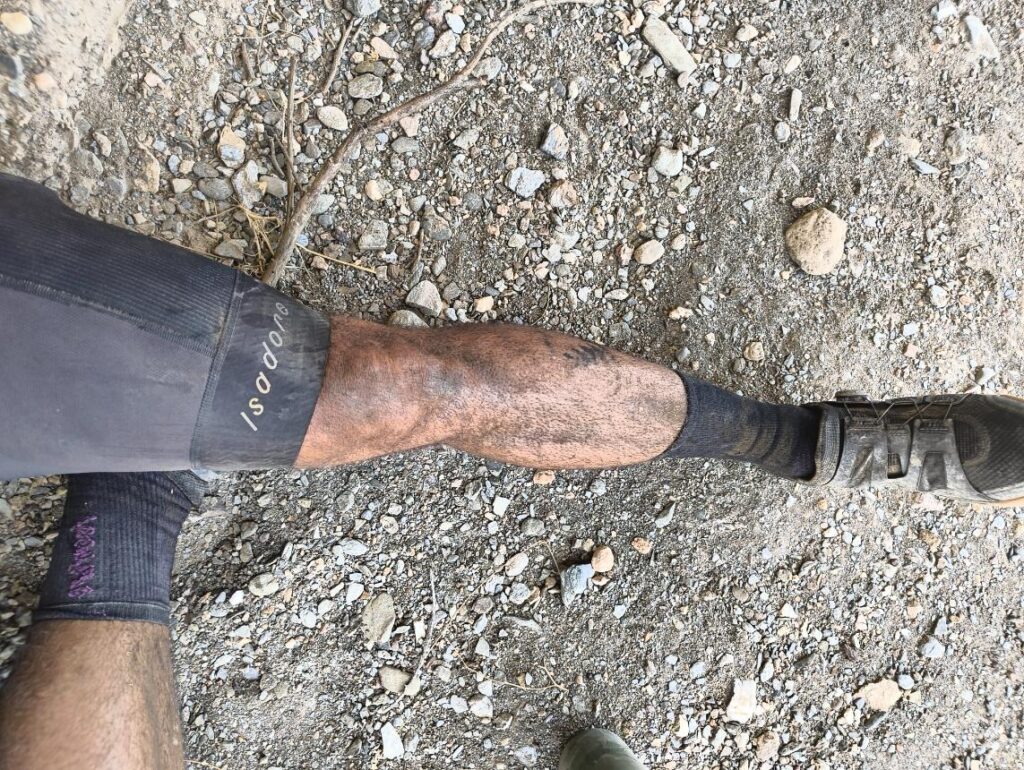
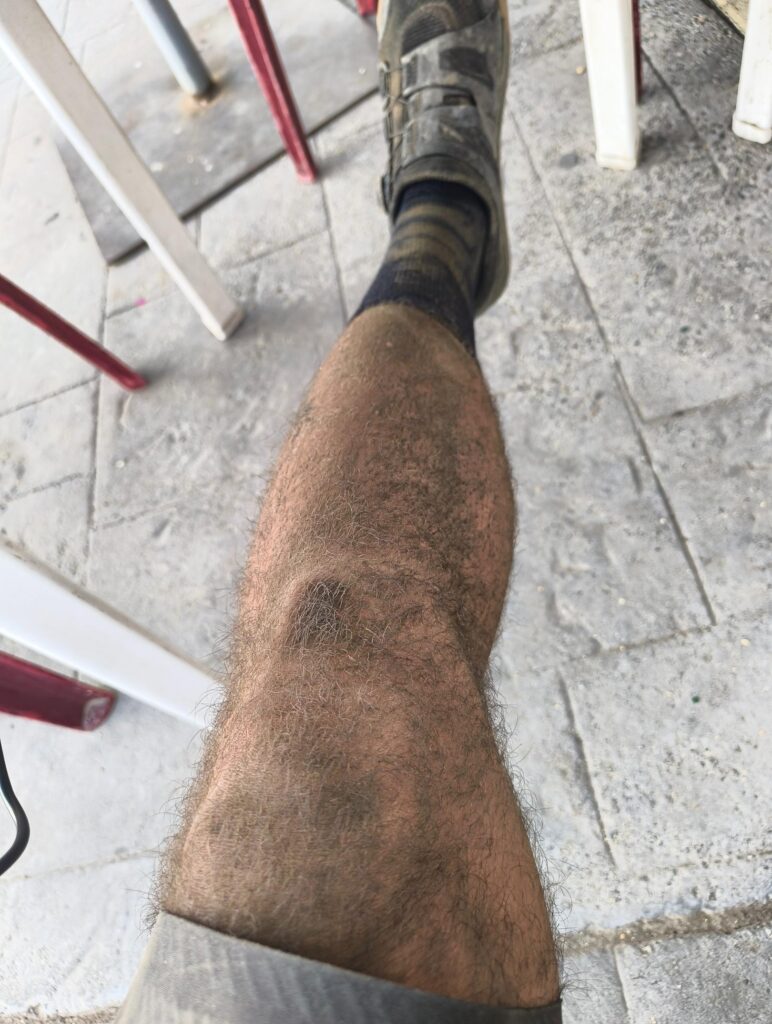
And then: the sea. After three days of desert and mountains, the Mediterranean appeared in the distance and something unlocked. I pushed through the last stretch of coastal gravel in the dark, arrived in Agua Amarga, and found a pizza restaurant still serving. My bike was caked in sand and dirt, my legs the same. People stared. I explained. They nodded politely.
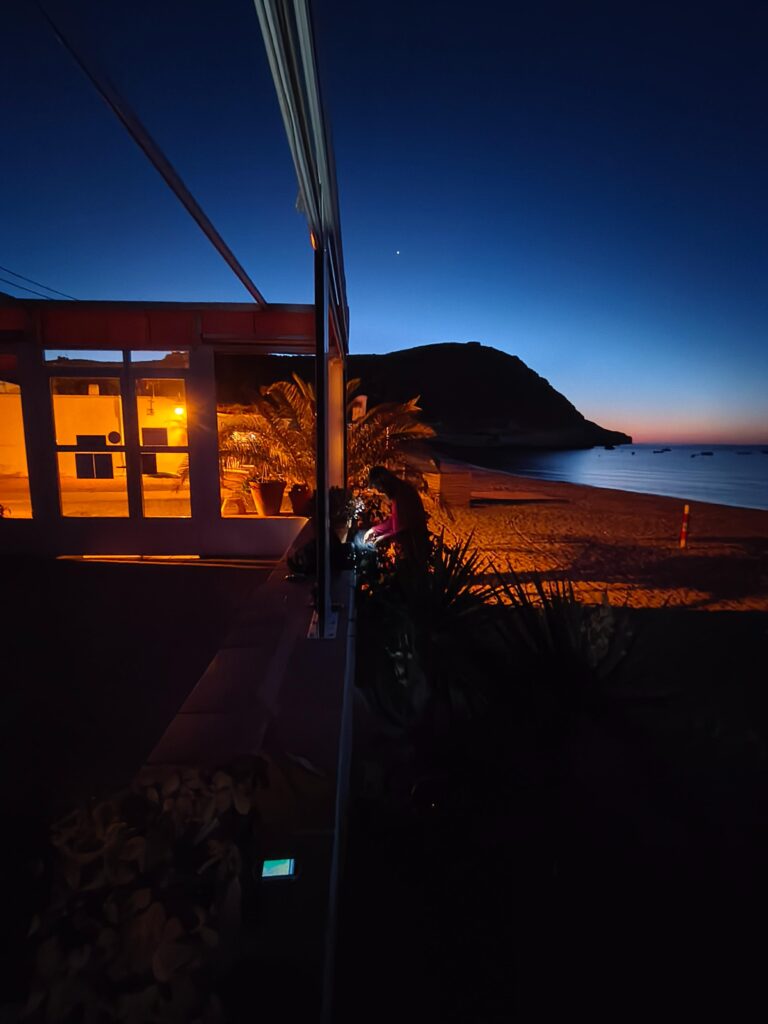
Modesto — a rider I’d crossed paths with several times during the Badlands race — arrived at the same restaurant. We tried hotels. Nothing available. We ended up on the beach: a quick swim in the sea, a public shower, and then sleep in a sheltered spot beneath a restaurant terrace with the sound of the waves as a soundtrack. Genuinely one of the better sleeps of the race.
Day 4 — Agua Amarga to Félix
Up at 6am feeling surprisingly good — which the Garmin refused to acknowledge, reporting 5% body battery and no detected sleep for the fourth night running. I’ve stopped trusting Garmins.
The day’s numbers looked easier on paper: the lowest elevation gain of the Badlands race at 2,200 m, though it came with 180+ km of distance to make up for it. The coast between Agua Amarga and San José was spectacular — smooth gravel along clifftops with the sea below. Modesto and I stopped at San José for a swim and a proper shower, refuelled, and carried on toward Cabo de Gata.
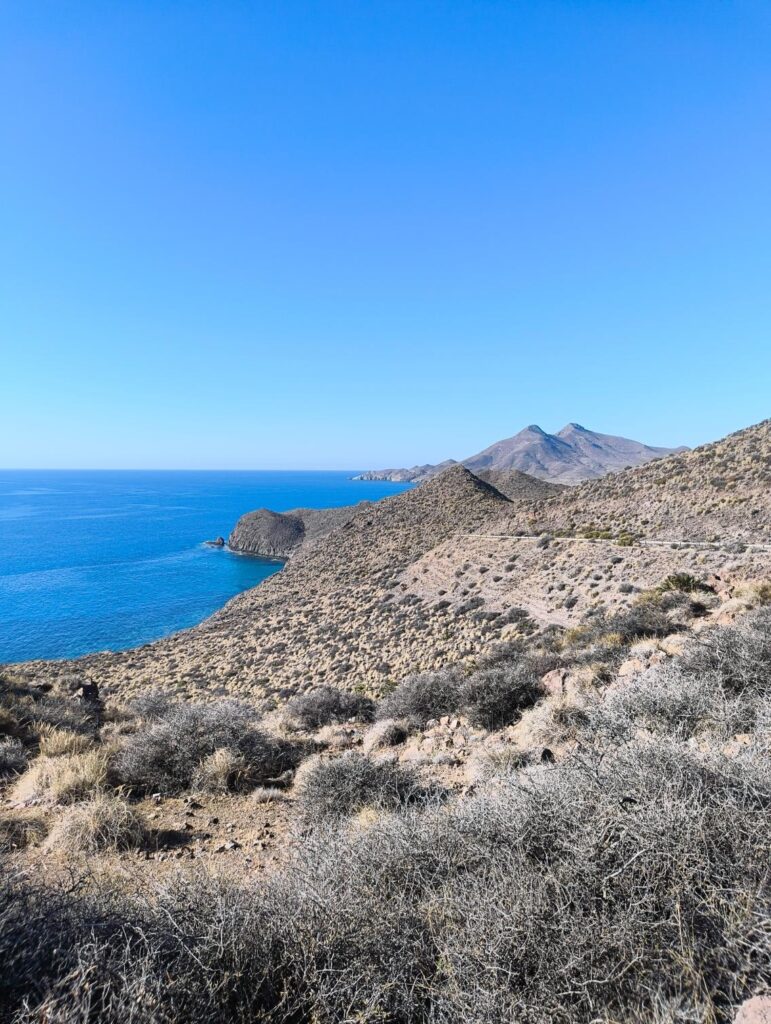
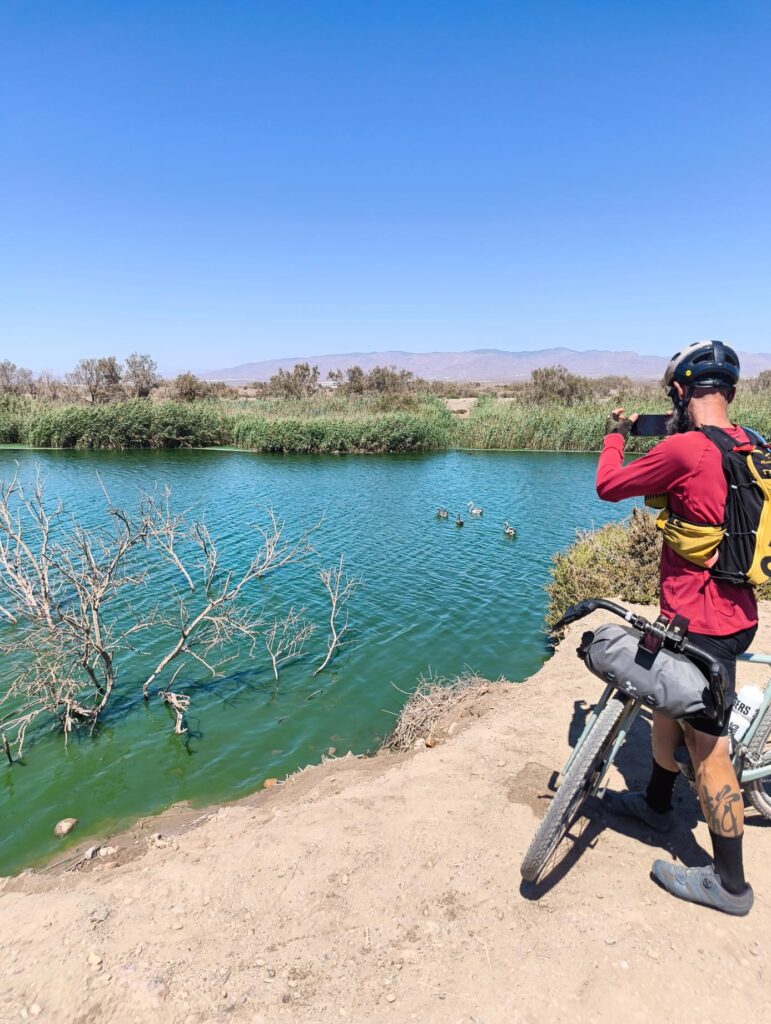
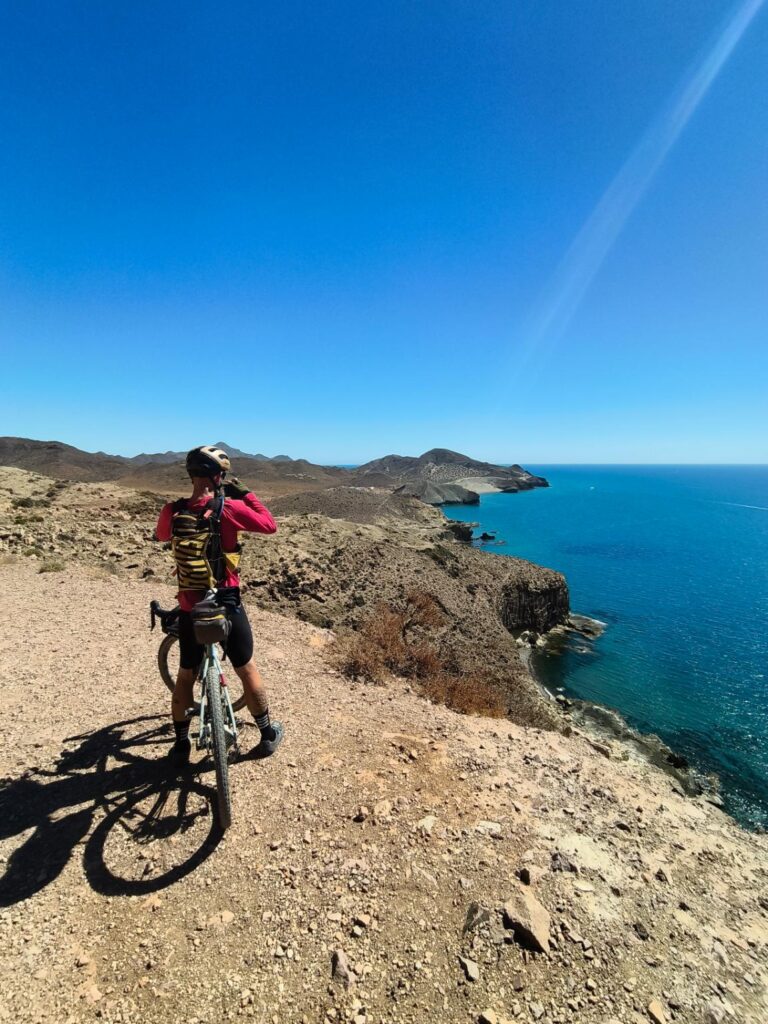
One short hike-a-bike section on the beach was redeemed entirely by flamingos. You take the wins you get.
We rolled into Almería and went straight to a bike shop. A slow leak in my front tyre had been quietly annoying me and I wanted it sorted before the final climbs. The mechanic added sealant and declared it fine. I bought ten energy bars and a handful of gels — the next stretch was going to be almost entirely uphill.
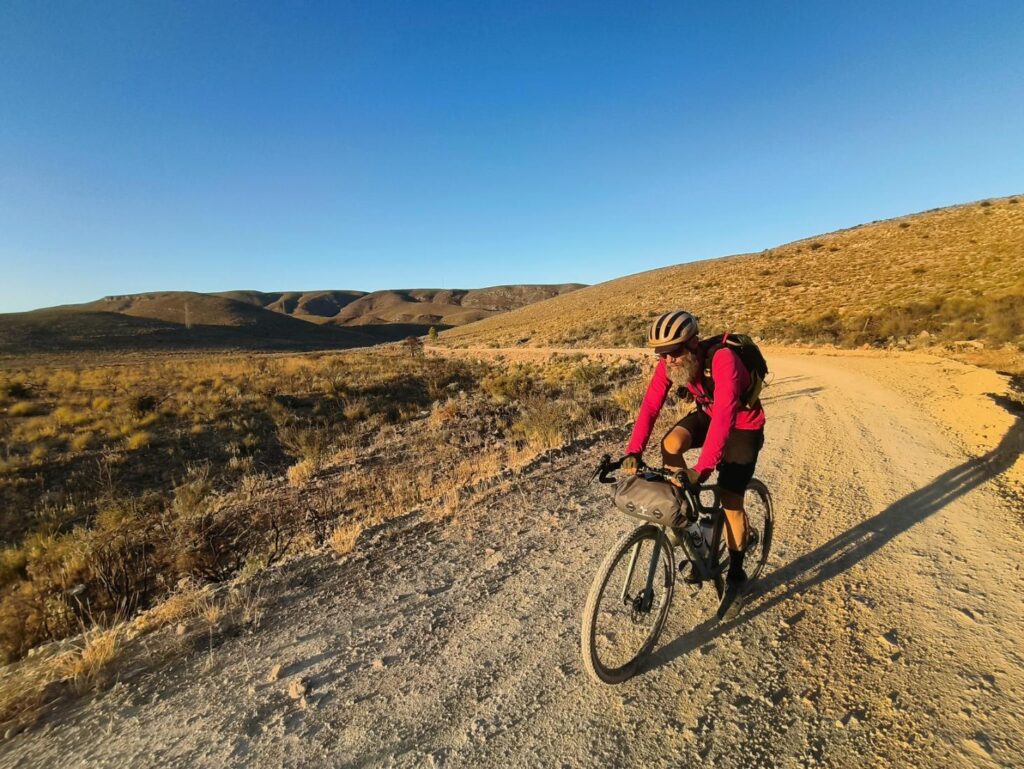
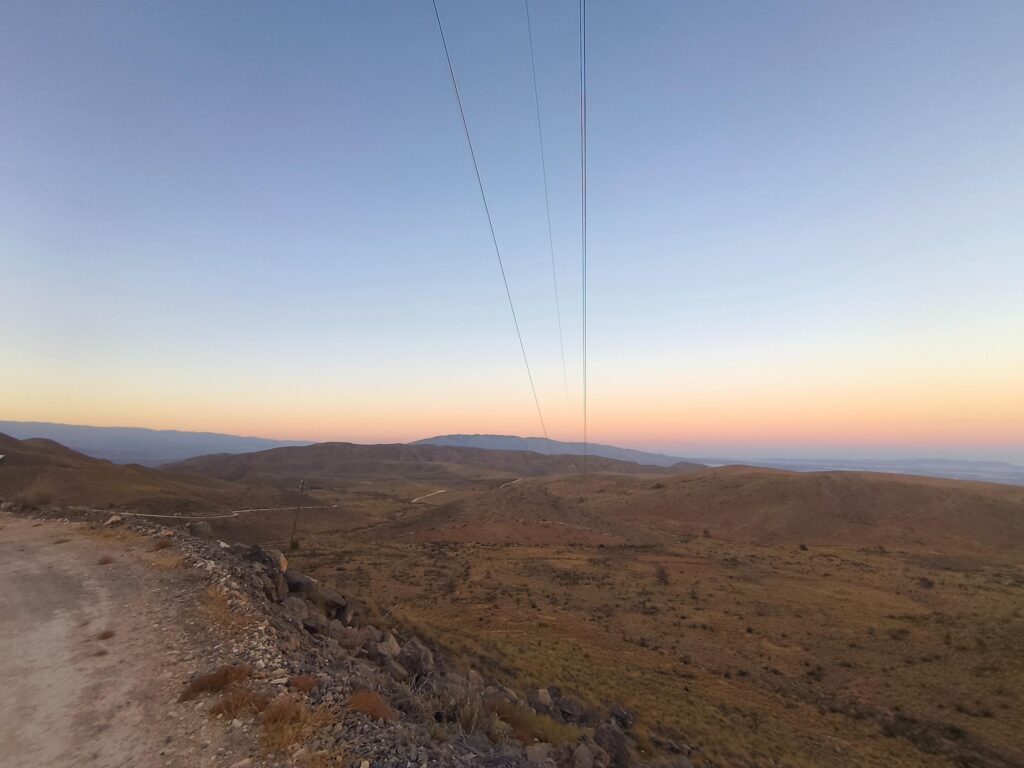
The Los Pedroches climb out of Almería, 14 km, took us three hours. The municipality had recently resurfaced the gravel, which turned a notoriously rough climb into something merely hard rather than punishing. Local cyclists passed us going the other way, asked where we’d started that morning, and when we told them their reactions ranged from disbelief to enthusiastic cheering. We needed both.
We bivvied in Félix on another playground — fake grass, a fountain, perfect quiet. The next climb could wait until morning.
Day 5 — Félix to Granada
The most brutal day on a bike I have ever had.
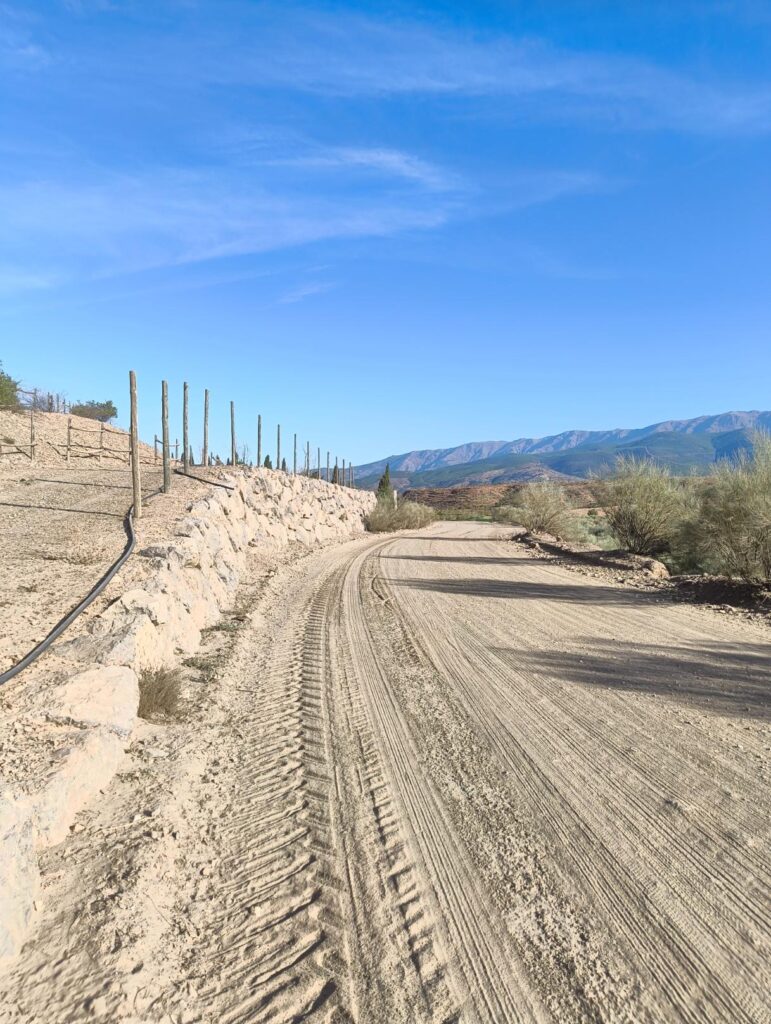
We were moving by 6am, straight into the climb out of Félix. Long and relentless, but the views were extraordinary — wide gravel roads cutting through a landscape of white rock and scrub with the coast fading behind us.
In Illar a large bar had been set up specifically for the Badlands race, complete with a pool and fountain. It was closed. Most of the field had passed through days ago. We found a small shop instead, ate everything we could, filled every bottle with water and ice, and prepared for what was coming.
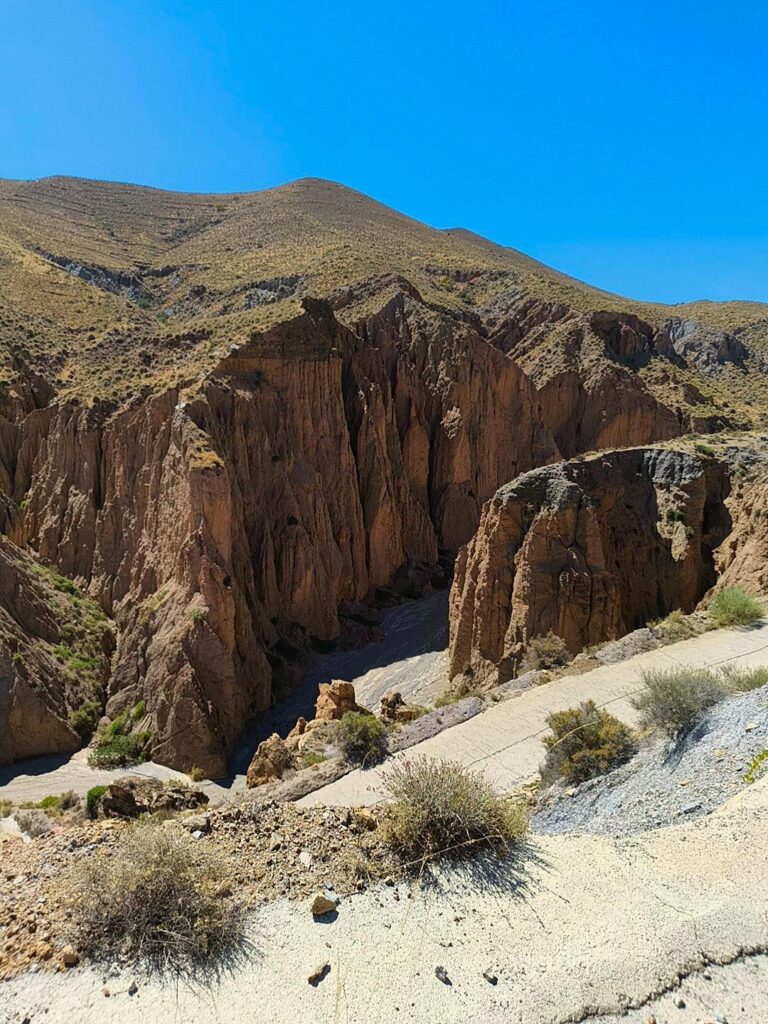
What was coming was a riverbed. The route dropped into a dried channel with walls so high we couldn’t see the service roads running along the top. We struggled through the rocky, uneven bed for too long before I checked the GPS properly and confirmed the service road was the right path. We climbed out, found smooth tarmac, and rolled into Alboloduy — where nothing was open and the fountain water was marked undrinkable. We poured what we had over ourselves and kept moving.
The climb out of town began in a valley so perfectly dramatic it felt like a film set. I kept expecting cowboys. Then 17 km of climbing in temperatures pushing 40°C — the longest, most beautiful, most physically painful climb I have ever ridden. Salt tabs, isotonic water, one foot in front of the other.
The descent from that height gave us a view of the entire Gorafe valley and the silhouette of Calar Alto on the horizon — the summit we’d stood on three days earlier. Nearly 400 km covered since then. The finish still felt very far away.
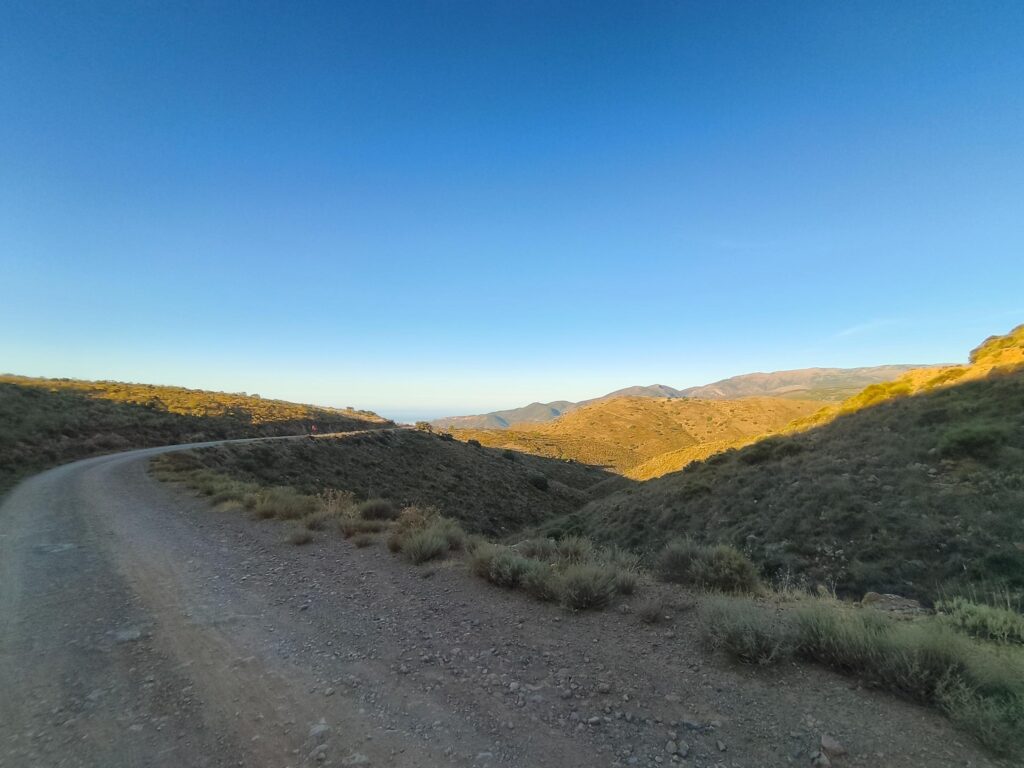
In Ocaña, Modesto was already halfway through a bowl of pasta when I arrived. I ordered the same, ate half, and stuffed the rest into an empty water bottle to eat on the next climb. We napped for 15 minutes and I left at 6pm.
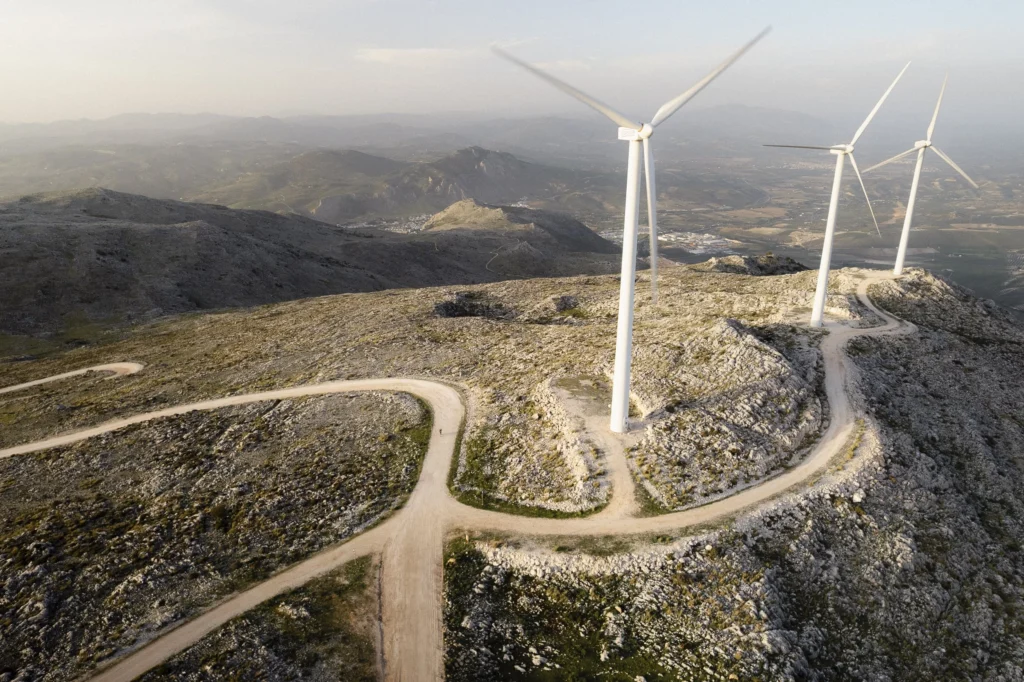
The next stretch was the best riding of the whole Badlands race. Tarmac descents into agricultural plains, almond groves, windmills, a tailwind, perfect evening temperatures and a sky full of stars. I felt strong. I could see the lights of other riders far ahead in the darkness. I ate a steak in Marquesado around 8pm, charged my GPS and lights, and left again at 9pm. Modesto decided to sleep in a nearby town. I decided to keep going.
The final climb — La Peza, the same village where I’d stopped for bocadillos on day one — arrived at the end of 180 km of riding. It wasn’t the steepest climb on the route. But at that point in the race it might as well have been a wall. Whenever the gradient exceeded what my legs could manage I got off and walked. No shame in it. I was still moving.
The hallucinations started on this climb. Riders ahead of me ducking into bushes to hide and jump out. A persistent, sourceless fear that sat in my chest for about half an hour with no explanation. Sleep deprivation does strange things and the Badlands race is long enough for it to do all of them.
I crested the climb knowing there were 30 km left. What I didn’t know was that those 30 km would be the hardest of my life.
The descent was cold — 3am cold, jacket and rain cape on, still shivering. I stuffed my spare bib short inside my down jacket across my chest, which helped more than I expected. Then came the real problem: I started falling asleep on the descent. Not nodding off — actually losing consciousness while rolling downhill on tarmac. That scared me more than anything else in the race.
I stood up on the pedals. I started singing — a song I made up on the spot, words that made no sense, loud enough to hear myself over the wind. It worked. I kept moving and kept singing and kept telling myself it was just a few more kilometres.
The final 5 km were a 17% climb on mountain tracks, crossing two small rivers in the dark on sketchy gravel and sand. I genuinely didn’t understand why the route ended this way. But it kept me awake, and I rolled into Granada at 5am on Friday — 9 hours inside the time limit.
Final thoughts
The Badlands race is the hardest thing I have ever done on a bike. The landscapes are unlike anything I’ve seen in years of riding — the Gorafe desert, the Tabernas basin, the climbs above Almería, the green valleys north of Granada. I’ll be back. Not next year — next year there are other roads I want to ride. But I’ll be back.