By Gabor
 After riding hundreds of kilometers with very little sleep, your brain starts playing tricks on you.
A bush becomes a person.
A road sign looks like an animal.
You swear someone is standing next to the road, only for them to disappear as you get closer.
If you’ve never experienced it, it sounds impossible.
If you’ve raced a multi-day ultra, you probably know exactly what I’m talking about.
Ultra cycling hallucinations are surprisingly common during long-distance races, especially after one or two nights with minimal sleep. They’re not a sign that something is wrong with you—they’re a warning that your brain is running out of recovery.
After racing events like Badlands, Gravel Birds, and The Goats, I’ve learned that managing sleep isn’t just about riding faster. It’s about staying safe and making good decisions when your body is exhausted.
What Are Ultra Cycling Hallucinations?
Ultra cycling hallucinations are visual or auditory experiences that aren’t actually there.
Most riders experience visual hallucinations first.
Examples include:
- People standing beside the road
- Animals crossing the trail
- Buildings that seem to move
- Objects changing shape
- Shadows turning into people
- Hearing voices or sounds that don’t exist
The important thing to understand is that these experiences usually happen after prolonged sleep deprivation, not because something is medically wrong.
Your brain is simply struggling to process information accurately.
Why Do Hallucinations Happen?
Several factors combine during an ultra race.
Sleep deprivation
This is the biggest cause.
Your brain needs sleep to process visual information correctly.
After 24–48 hours with little rest, it starts filling in missing information, especially in darkness.
Mental fatigue
You’re making thousands of decisions every day:
- Navigation
- Eating
- Drinking
- Traffic
- Pacing
- Bike handling
Eventually your brain becomes overloaded.
Riding Through the Night
Darkness makes everything harder to recognise.
A tree stump suddenly looks like a person.
A mailbox becomes an animal.
Your brain would rather guess incorrectly than admit it doesn’t know what it’s seeing.
Low Energy
When you’re behind on calories, your cognitive performance drops.
That’s another reason why nutrition isn’t only about your legs.
It’s also about protecting your brain.
Dehydration
Even mild dehydration reduces concentration and reaction time.
Combined with sleep deprivation, it makes hallucinations much more likely.
My Experience During Ultra Races
One of the biggest lessons I’ve learned racing ultras is that your brain often gives up before your legs do.
During long nights, I found myself looking twice at ordinary objects because they didn’t seem real at first glance.
Road signs became people.
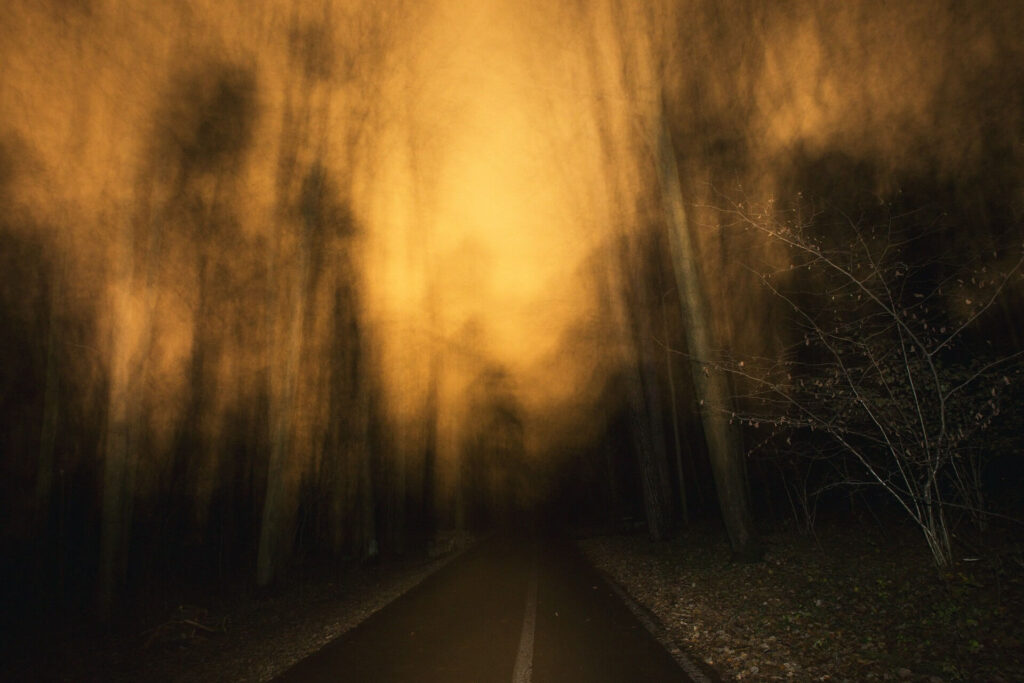
Shadows looked like parked cars.
Sometimes I’d slow down simply because I wasn’t completely sure what I was seeing.
Nothing dramatic happened, but those moments reminded me that fatigue changes the way your brain interprets the world.
That’s why I never try to “push through” severe sleep deprivation anymore.
When your brain starts making mistakes, your race strategy has already changed.
Why Hallucinations Are Dangerous
The hallucinations themselves aren’t usually the problem.
The decisions that follow are.
Sleep deprivation affects:
- Navigation
- Reaction time
- Balance
- Judgement
- Risk assessment
I’ve always believed that finishing an ultra is about making hundreds of good decisions.
When your brain is exhausted, those decisions become harder.
You might miss a turn.
Forget to eat.
Ride past a resupply point.
Or simply stop paying attention to traffic.
The First Signs You’re Getting Too Tired
Hallucinations don’t appear out of nowhere.
Usually there are warning signs first.
Watch for:
- Constant yawning
- Difficulty focusing
- Drifting across the road
- Reading the same GPS screen multiple times
- Missing simple turns
- Feeling unusually emotional
- Microsleeps
Microsleeps are especially dangerous.
You may close your eyes for only one or two seconds without realising it.
At 25 km/h, that’s enough to end your race.
How I Prevent Ultra Cycling Hallucinations
Over time I’ve realised that preventing hallucinations starts long before they happen.
I Eat Before I’m Hungry
Once you’re behind on calories, catching up becomes difficult.
I stick to a consistent nutrition strategy instead of waiting until I feel empty.
I Stay Ahead of Hydration
Especially in races like Badlands, dehydration builds slowly.
If you’re only drinking when you’re thirsty, you’re already behind.
I Respect Sleep
One of the biggest lessons I’ve shared in my Ultra Cycling Sleep Strategy guide is that sleep is part of racing—not a sign of weakness.
I’ve slept in playgrounds because the rubber flooring is surprisingly comfortable.
I’ve used municipal buildings with covered entrances to stay dry for a quick nap.
Finding simple, safe places to recover has helped me ride stronger the next day than trying to force another few hours while completely exhausted.
Sometimes twenty minutes of real sleep is worth far more than another twenty kilometres of poor riding.
Should You Use Caffeine?
Caffeine is a useful tool.
It’s not a replacement for sleep.
Many riders make the mistake of taking more and more caffeine as they become tired.
Eventually it stops improving alertness while making hydration and recovery more difficult.
I prefer using caffeine strategically rather than constantly throughout a race.
When Should You Stop?
There’s no universal rule.
For me, the decision becomes simple when I can no longer trust my own judgement.
If I’m:
- repeatedly seeing things,
- struggling to stay focused,
- missing obvious navigation,
- fighting microsleeps,
it’s time to sleep.
No finish time is worth risking your safety.
Hallucinations Don’t Mean You’ve Failed
One thing I wish more riders talked about is that ultra cycling hallucinations are incredibly common.
They don’t mean you’re weak.
They don’t mean you’re unprepared.
They simply mean you’ve reached a point where your brain needs recovery.
The strongest ultra cyclists aren’t the ones who ignore those signs.
They’re the ones who recognise them early, adapt their strategy, and keep moving safely.
That’s one of the biggest lessons I’ve taken from every ultra I’ve raced.
Because in ultra cycling, success isn’t just about how hard you can push.
It’s about knowing when your body—and your mind—need you to make the smarter decision.
Final Thoughts
Every ultra teaches you something new.
For me, one of the biggest lessons has been that the brain is just as important as the legs.
Managing sleep, eating consistently, staying hydrated, and recognising the early signs of fatigue are all part of becoming a better ultra cyclist.
If you ever experience ultra cycling hallucinations, don’t panic.
Slow down.
Assess how you’re feeling.
Find a safe place to rest if needed.
The finish line will still be there when your mind is working properly again.